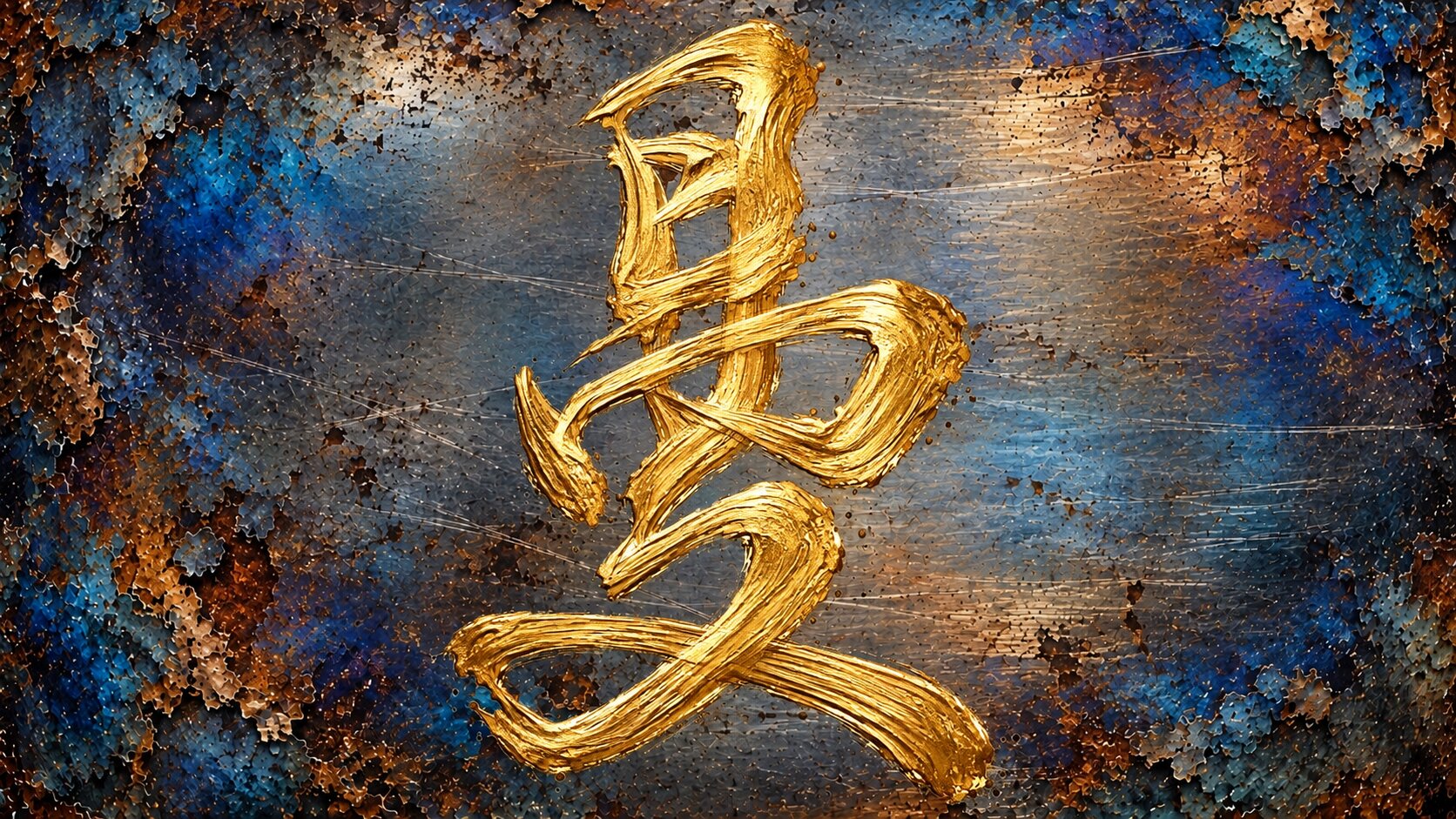
💡 Tip: Click the featured kanji to view stroke order animations
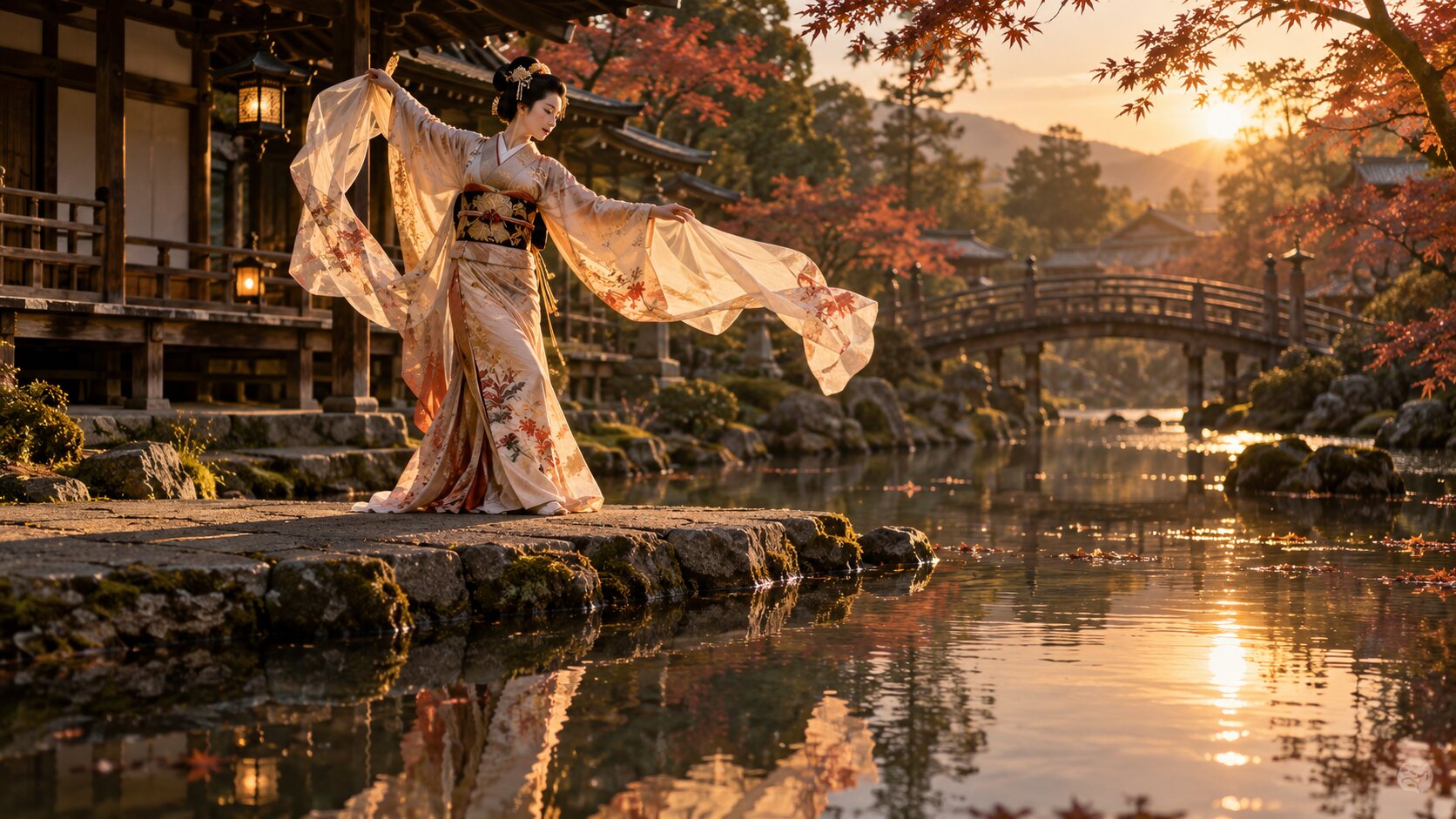
薄絹の袖が風にひらき、
舞う人の影が水面に伸びる。
曼たる動きは、時まで緩やかにする。
Silken sleeves open in the breeze,
and the dancer’s shadow stretches across the water.
Graceful movement seems to slow even time.
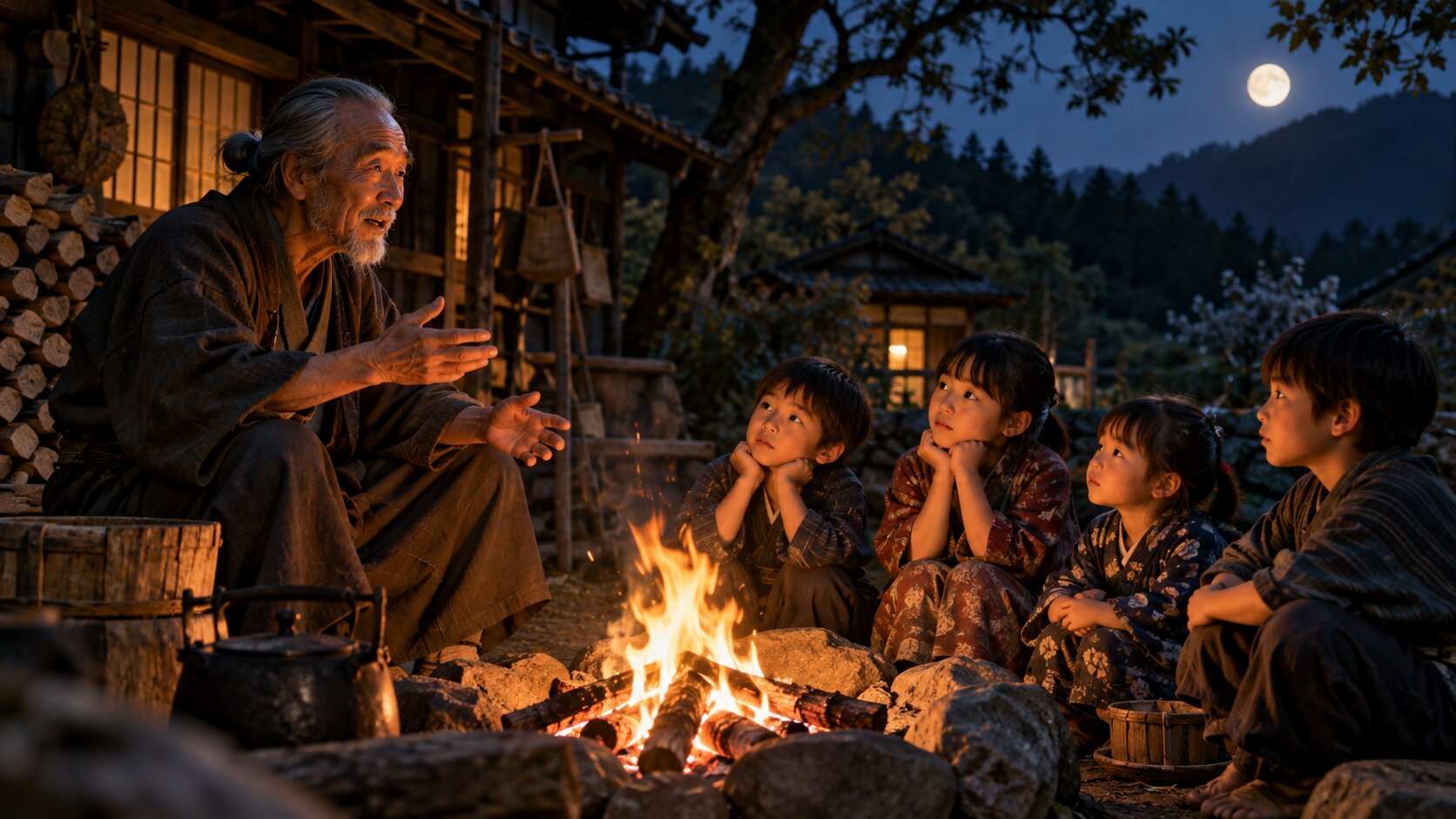
老人は昔のことを云い、
子どもは炎の向こうに耳を澄ます。
語られた言葉が、消えた時代を呼び戻す。
An old man speaks of long ago,
while children listen beyond the fire.
Spoken words summon a vanished age.
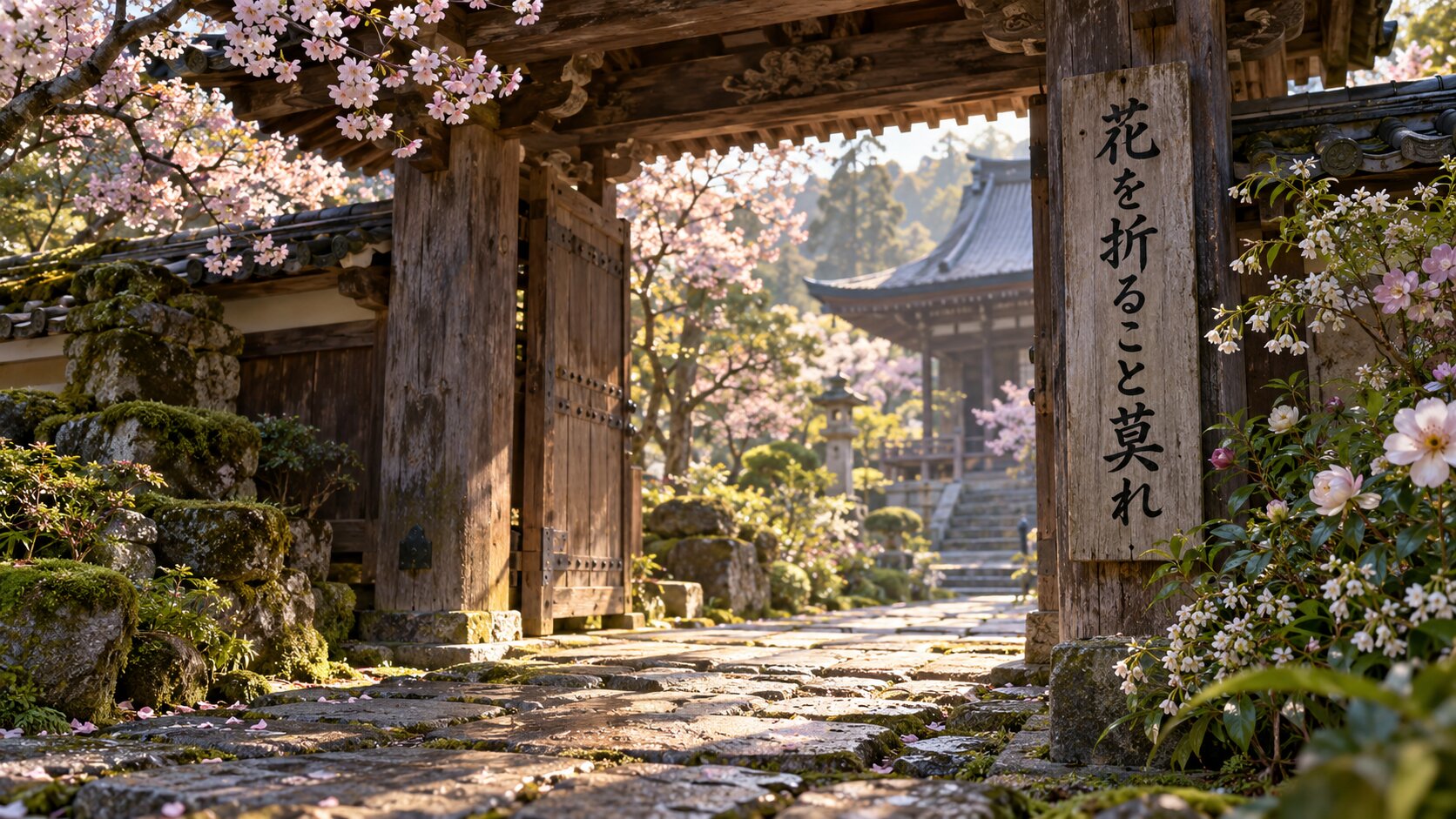
山門の札には、
花を折ること莫れと記されている。
守る心は、小さな戒めから始まる。
A sign at the temple gate
asks that no flowers be broken.
The will to protect begins with a small restraint.
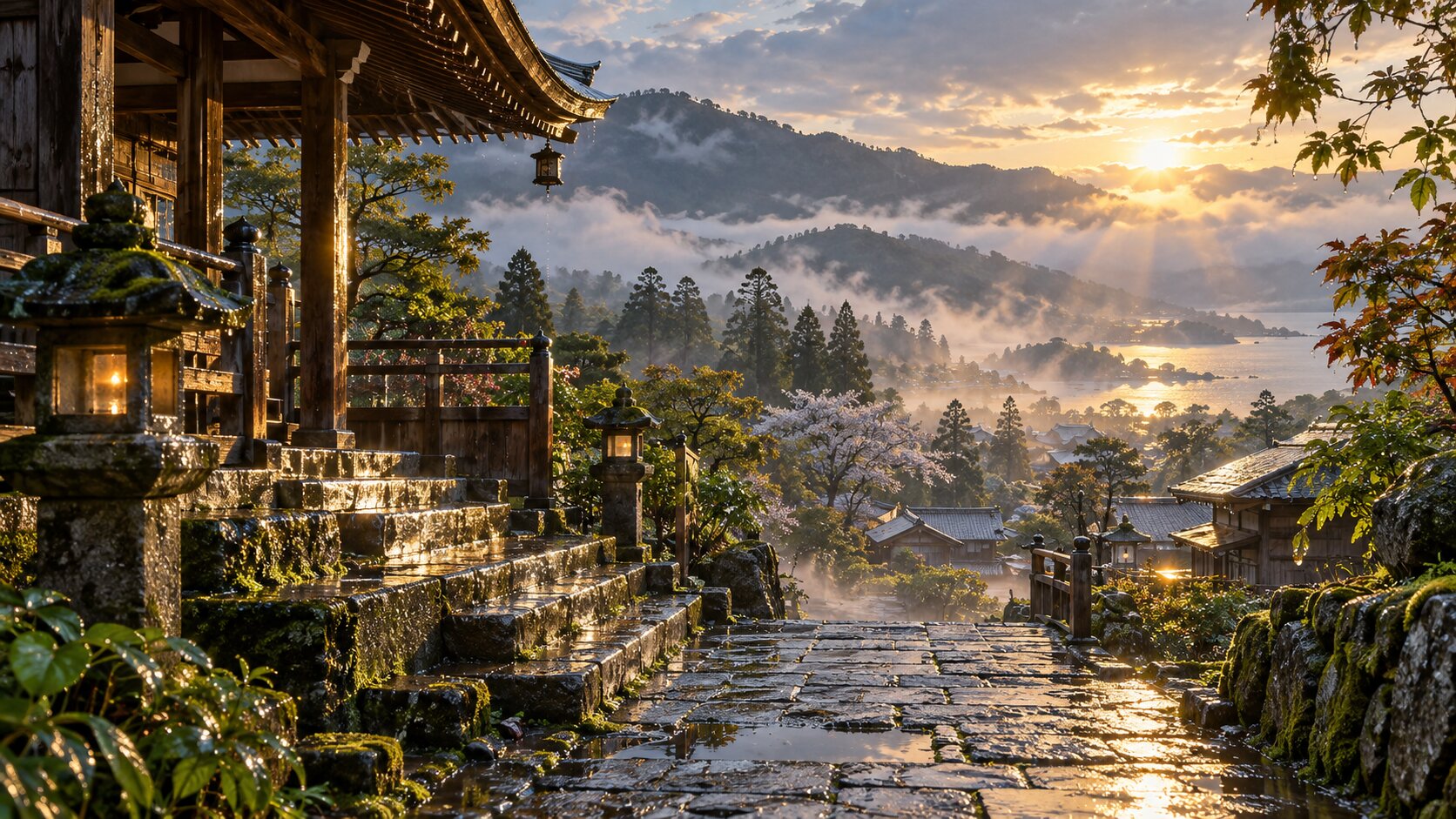
雨は一晩中降り続き、
而して朝には空が澄んだ。
長い夜の後にも、景色は新しくなる。
Rain falls throughout the night,
and yet the morning sky clears.
Even after a long darkness, the world can appear renewed.
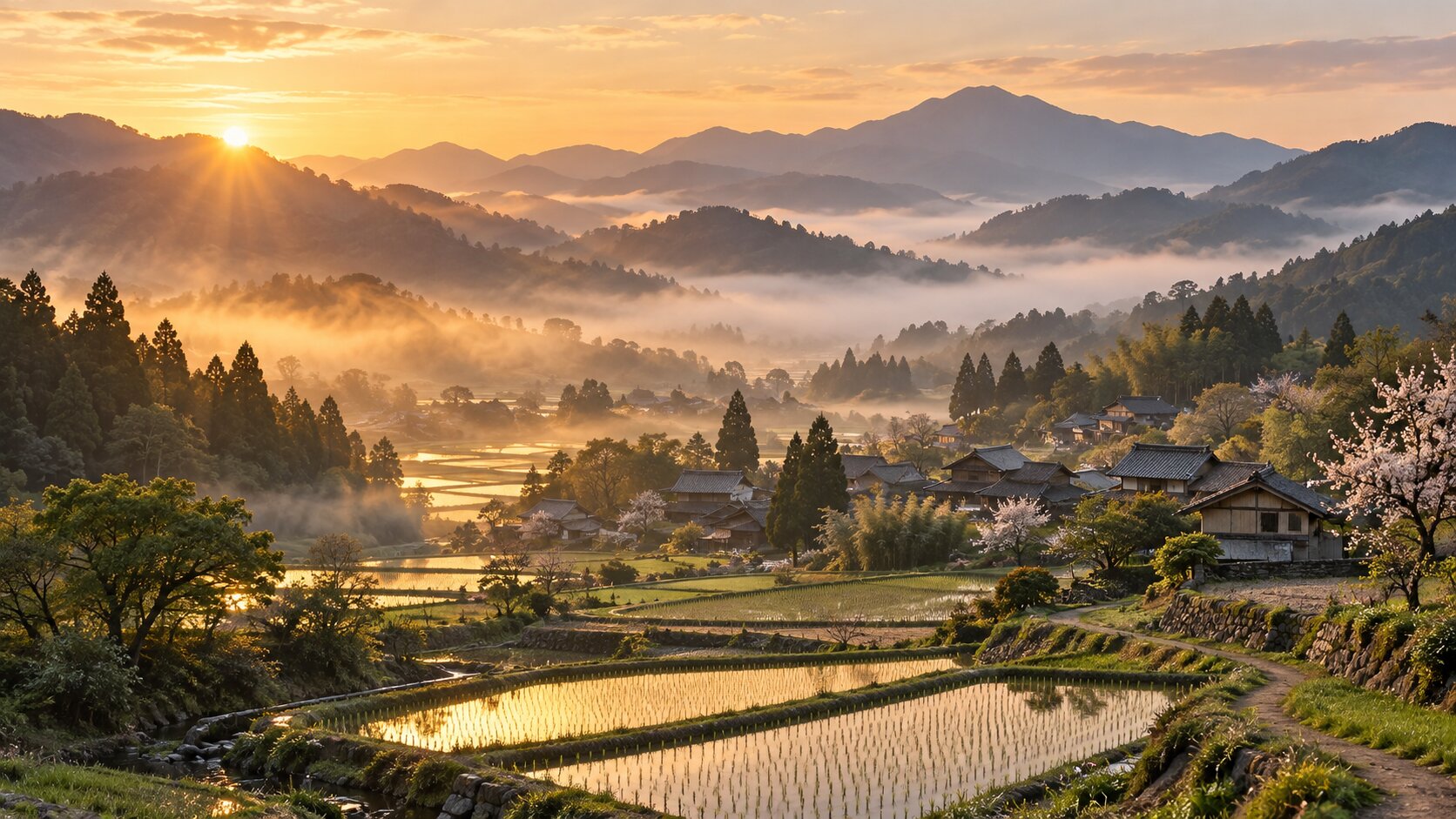
倭の山々に朝霧がかかり、
田と村が淡い光に浮かぶ。
古い国の名は、今も風景に息づく。
Morning mist rests on the mountains of Yamato,
while fields and villages emerge in pale light.
The ancient name still breathes within the landscape.
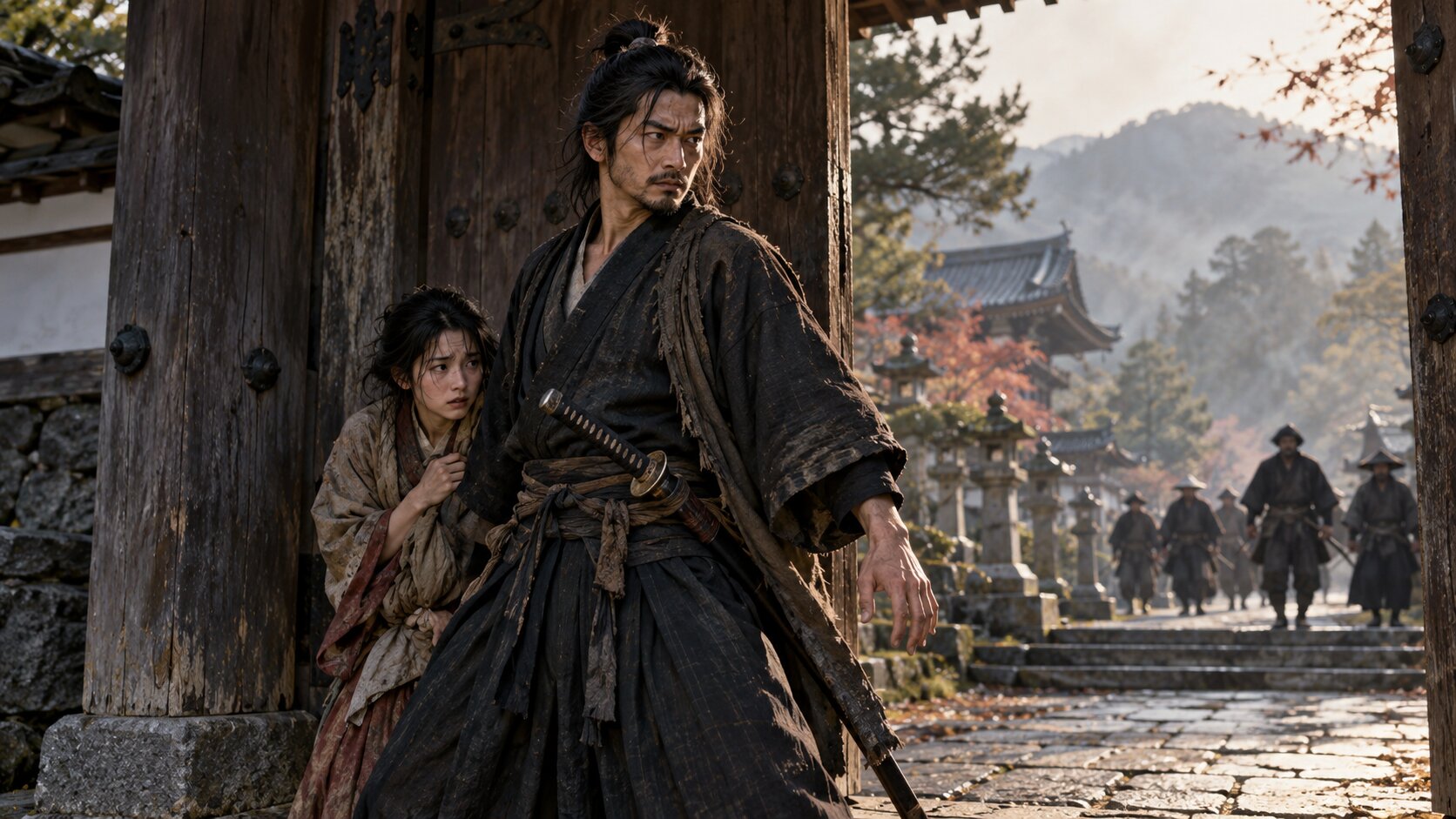
追われた旅人を庇い、
男は黙って門前に立つ。
侠の心は、弱い者の側を選ぶ。
Shielding a pursued traveller,
a man stands silently before the gate.
The chivalrous heart chooses the side of the vulnerable.
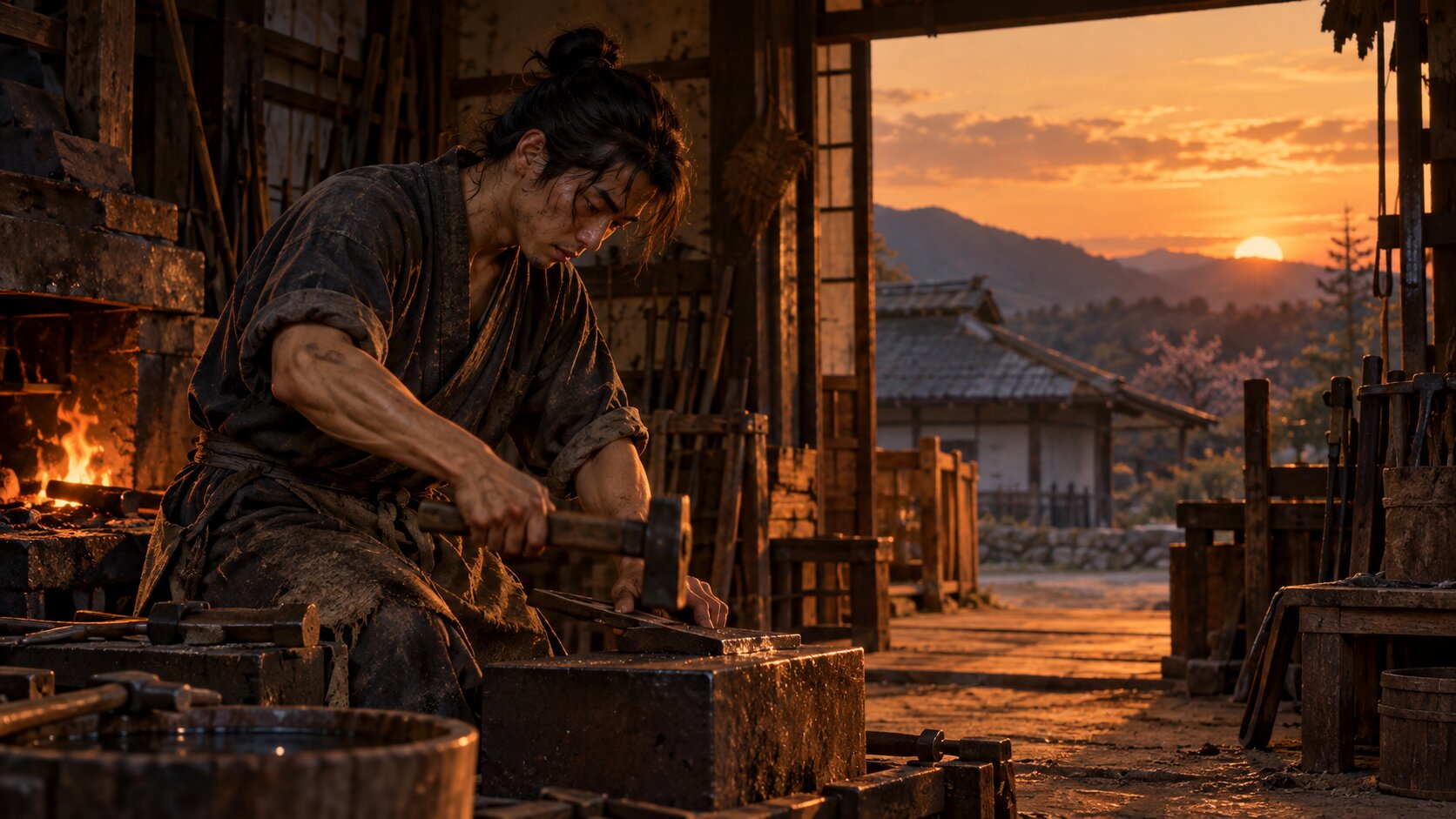
同じ仕事を繰り返し、
若者の手は次第に倦んでゆく。
それでも夕暮れまで、槌の音は止まらない。
Repeating the same labor,
the young worker’s hands slowly grow weary.
Still, the hammer sounds until dusk.
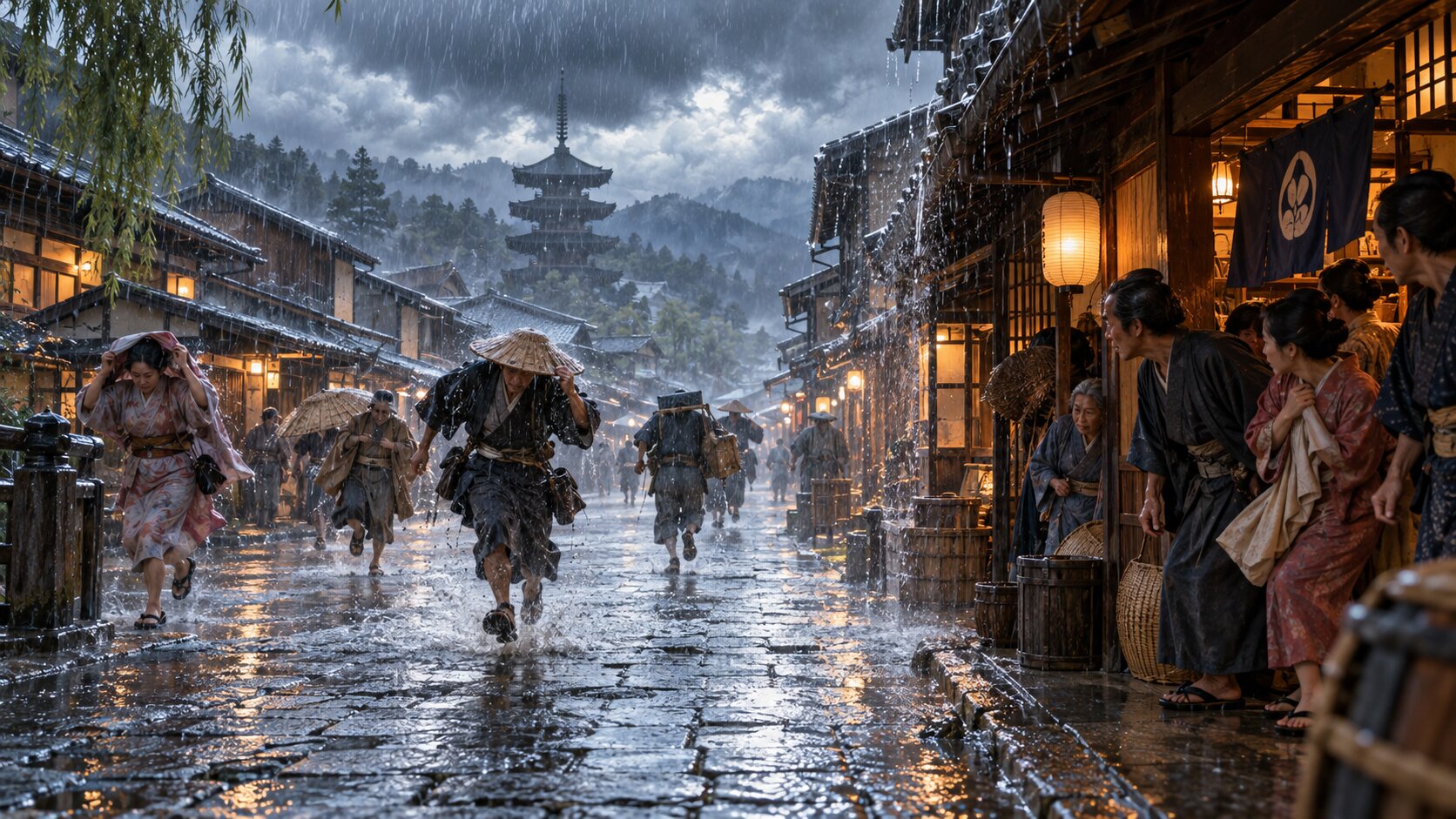
俄雨が通りを打ち、
人々は軒下へ一斉に駆け込む。
空の気分は、いつも人より早く変わる。
A sudden shower strikes the street,
sending everyone beneath the eaves.
The sky changes its mood faster than people do.
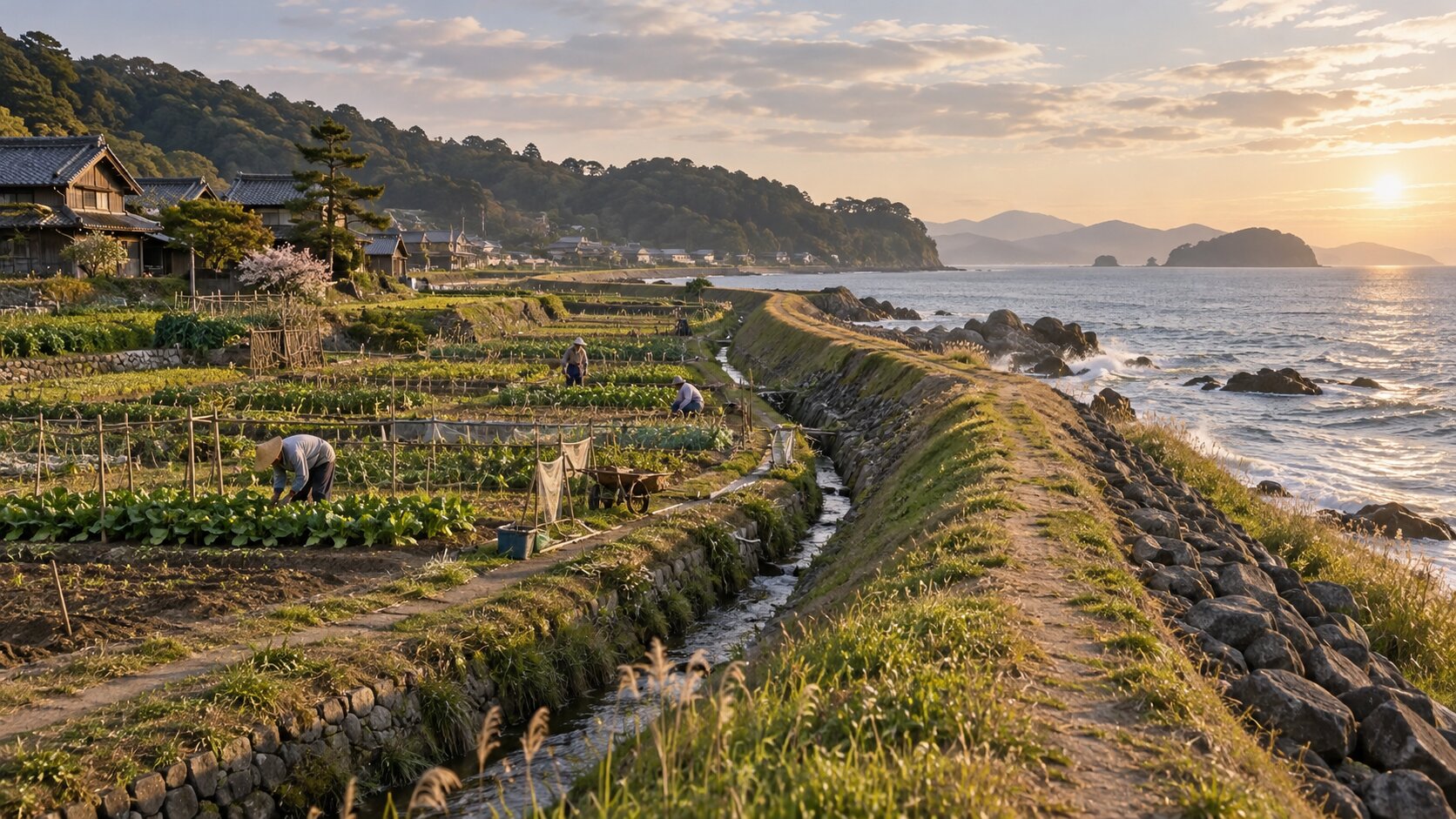
海辺の低い佃に、
潮を防ぐ土手と小さな畑が続く。
人は狭い土地にも、暮らしを育てる。
Along the low coastal fields,
small farms stretch behind earthen embankments.
People cultivate a life even on narrow ground.
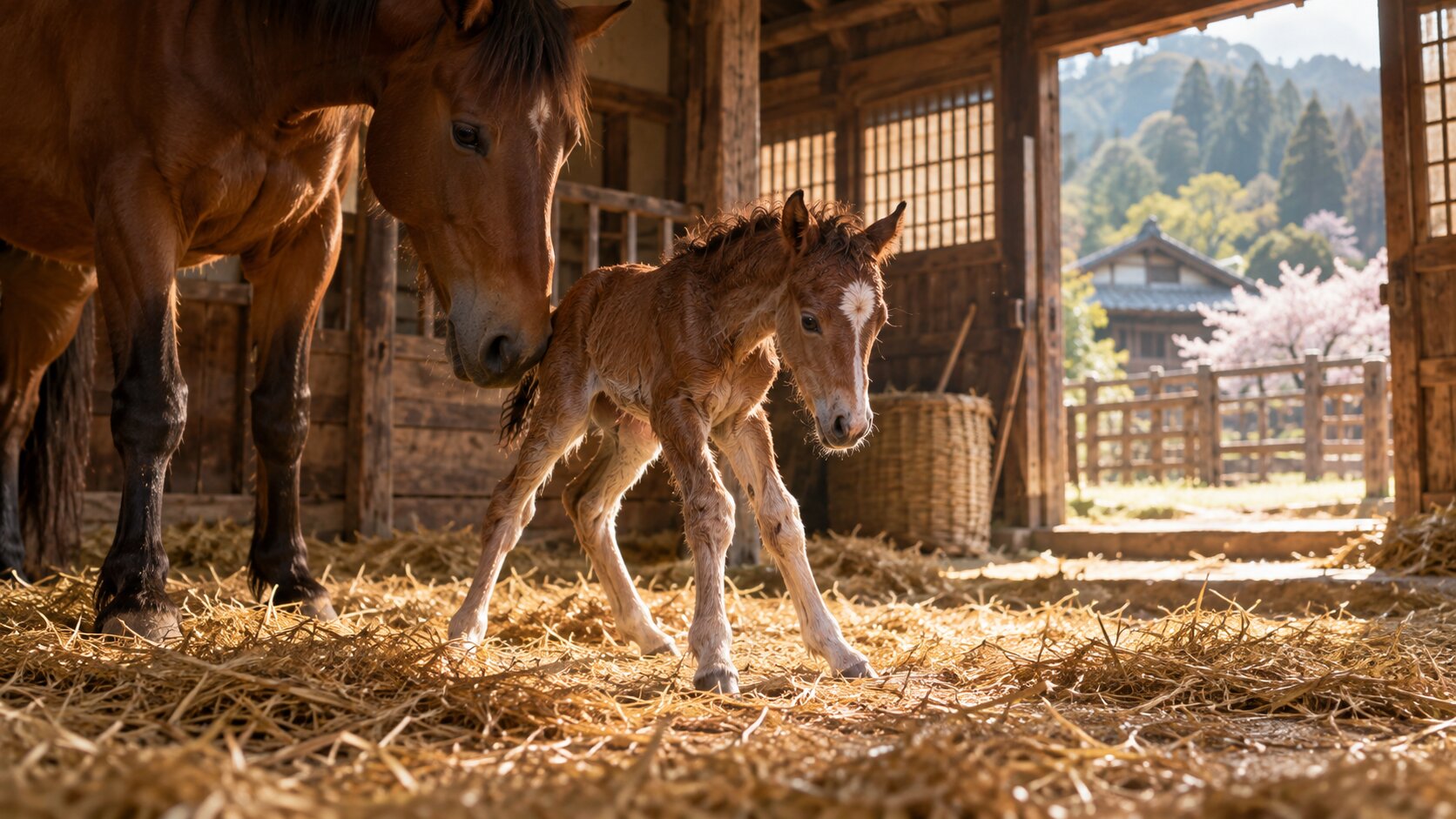
納屋の藁の上で、
生まれたばかりの仔馬が立とうとする。
震える脚にも、生きる意志がある。
On the straw inside the barn,
a newborn foal struggles to stand.
Even trembling legs carry the will to live.
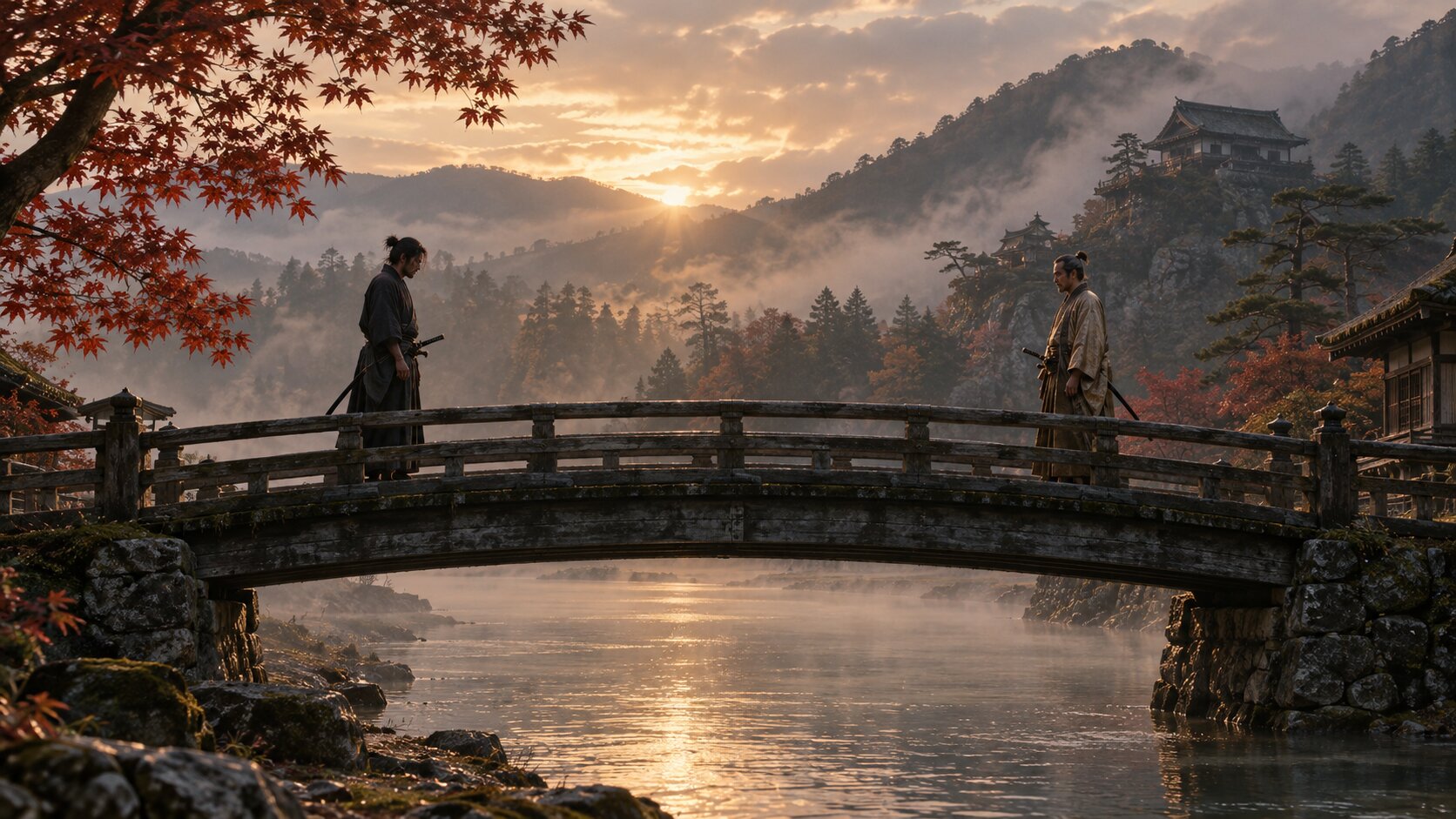
古い仇と橋の上で出会い、
二人はしばらく黙って向き合う。
憎しみを越える一歩が、最も重い。
Meeting an old enemy upon the bridge,
the two face each other in silence.
The step beyond hatred is the heaviest one.
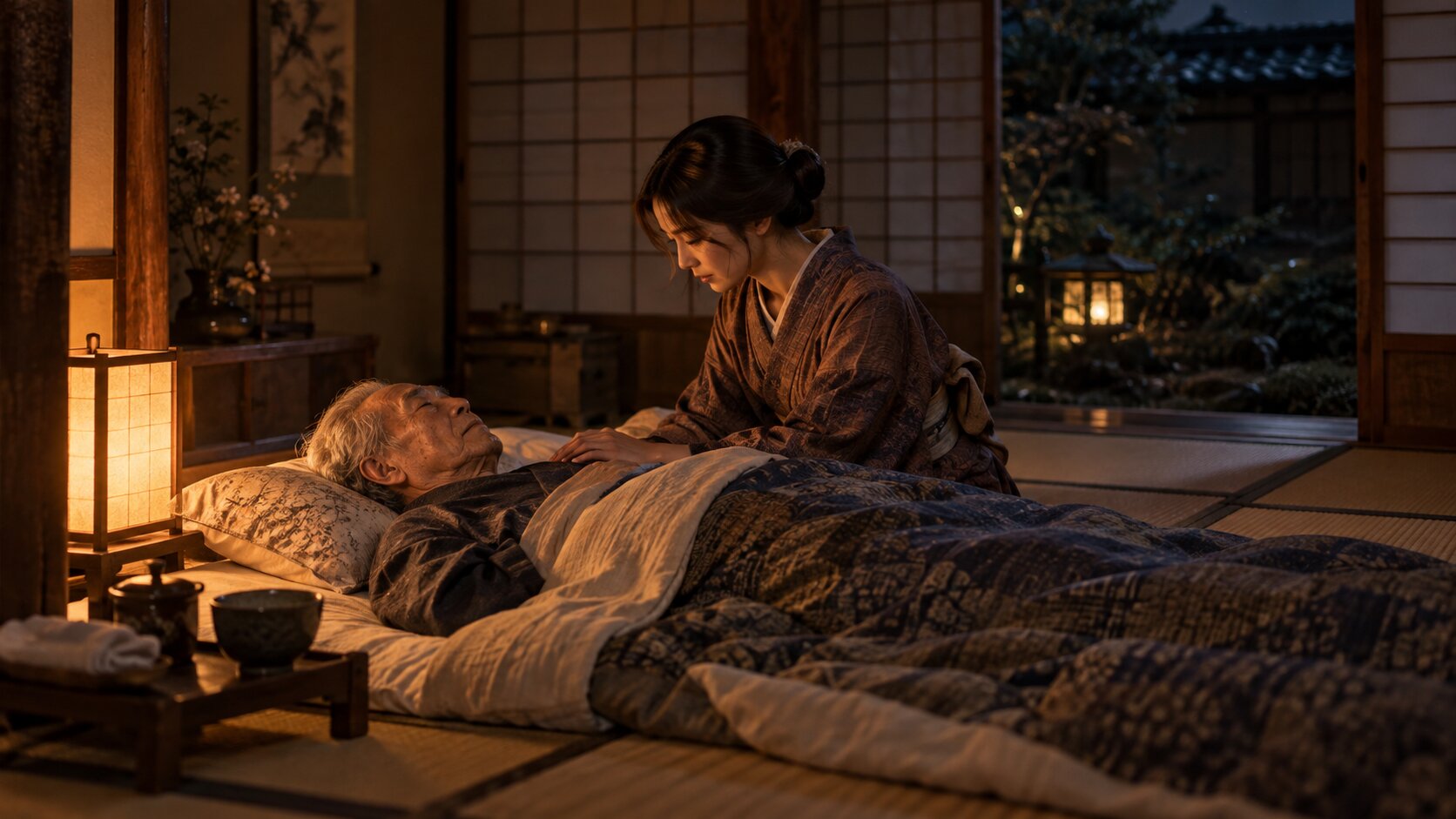
病む老人の枕元で、
娘は夜通し伽をしている。
そばにいることが、最も静かな薬になる。
Beside the sick man’s pillow,
his daughter keeps him company through the night.
Simply remaining near can be the quietest medicine.
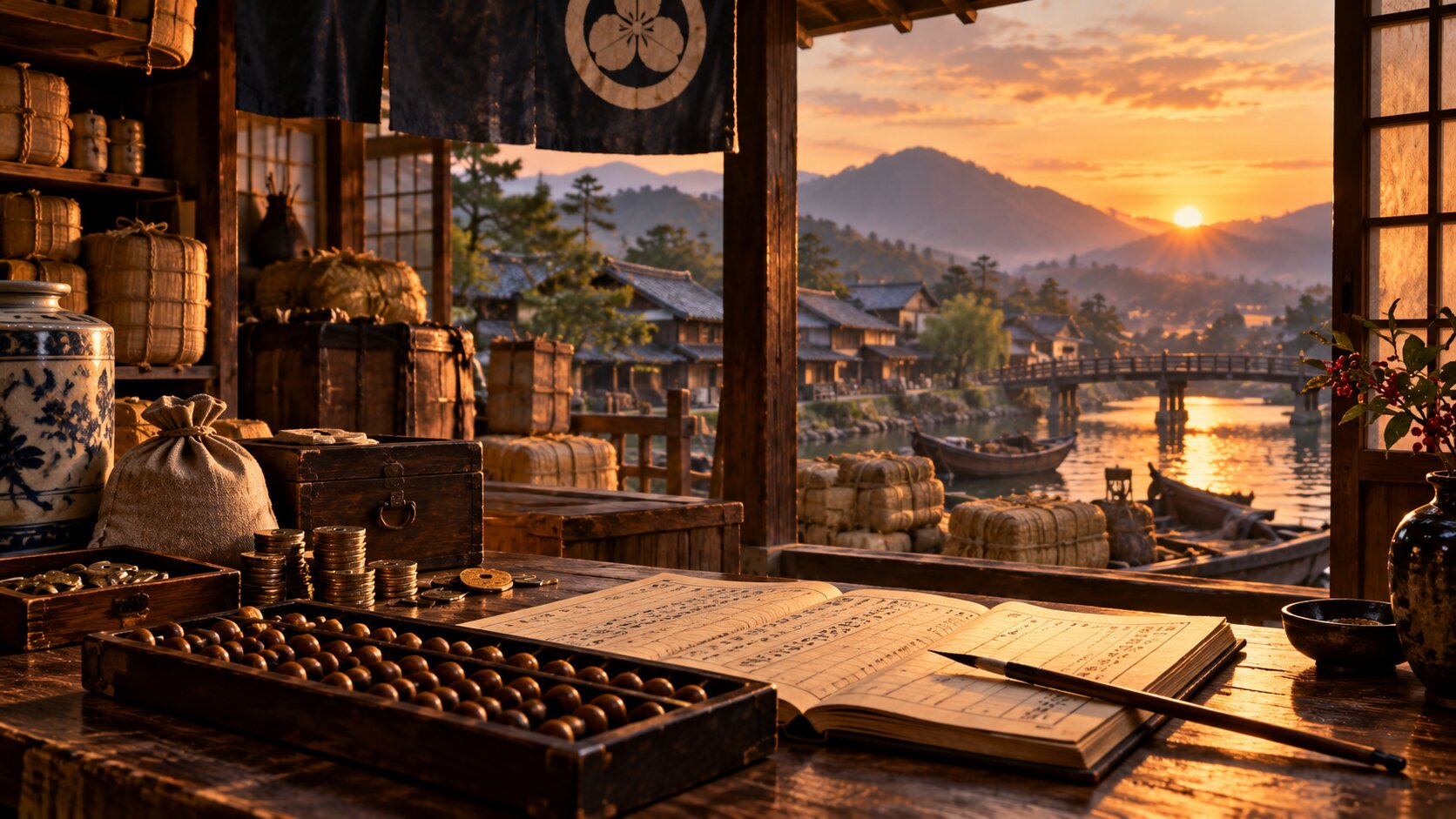
商いを終えた主人は、
今日の儲けを帳面に記す。
数の向こうには、多くの働く手がある。
At the end of business,
the merchant records the day’s profit.
Behind the numbers are many working hands.
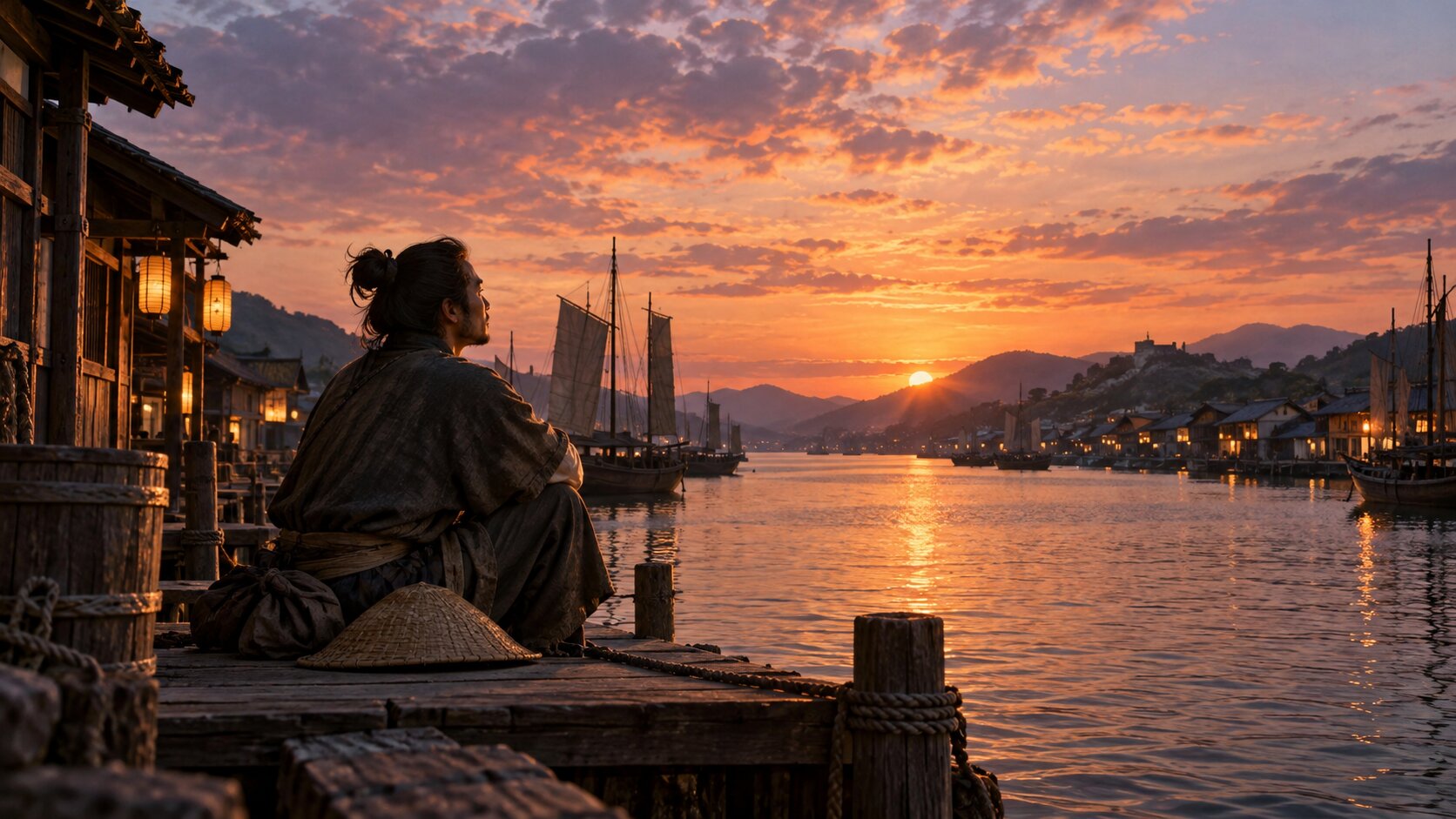
遠い港町で暮らす僑人は、
故郷の歌を小さく口ずさむ。
新しい土地にも、古い空はついて来る。
A sojourner living in a distant port
quietly hums a song from home.
Even in a new land, the old sky follows.
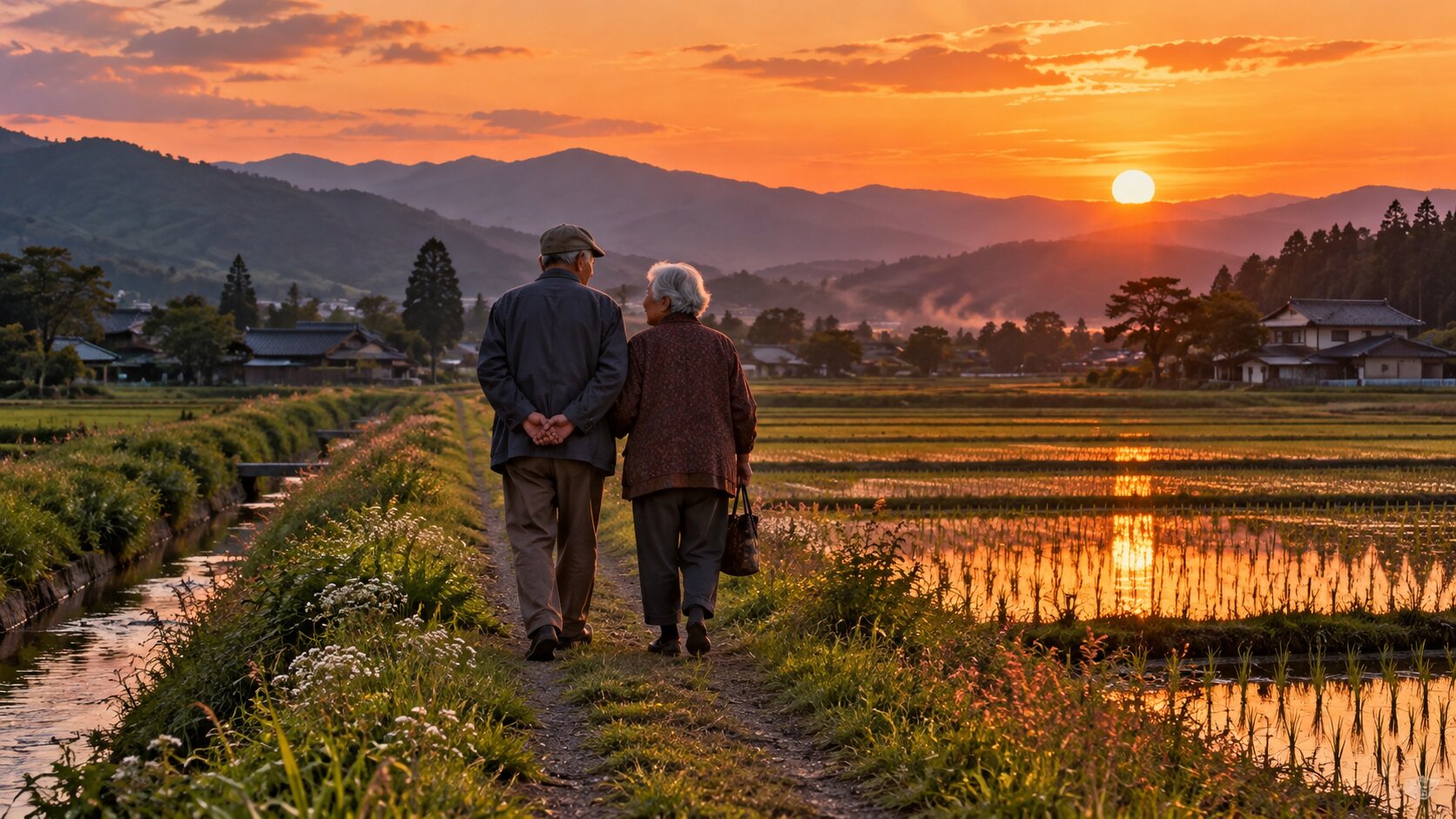
老いた夫婦は倶に、
夕暮れの畦道をゆっくり歩く。
長い年月は、歩幅まで似せてゆく。
An elderly couple walk together
along the field path at dusk.
Long years make even their pace alike.
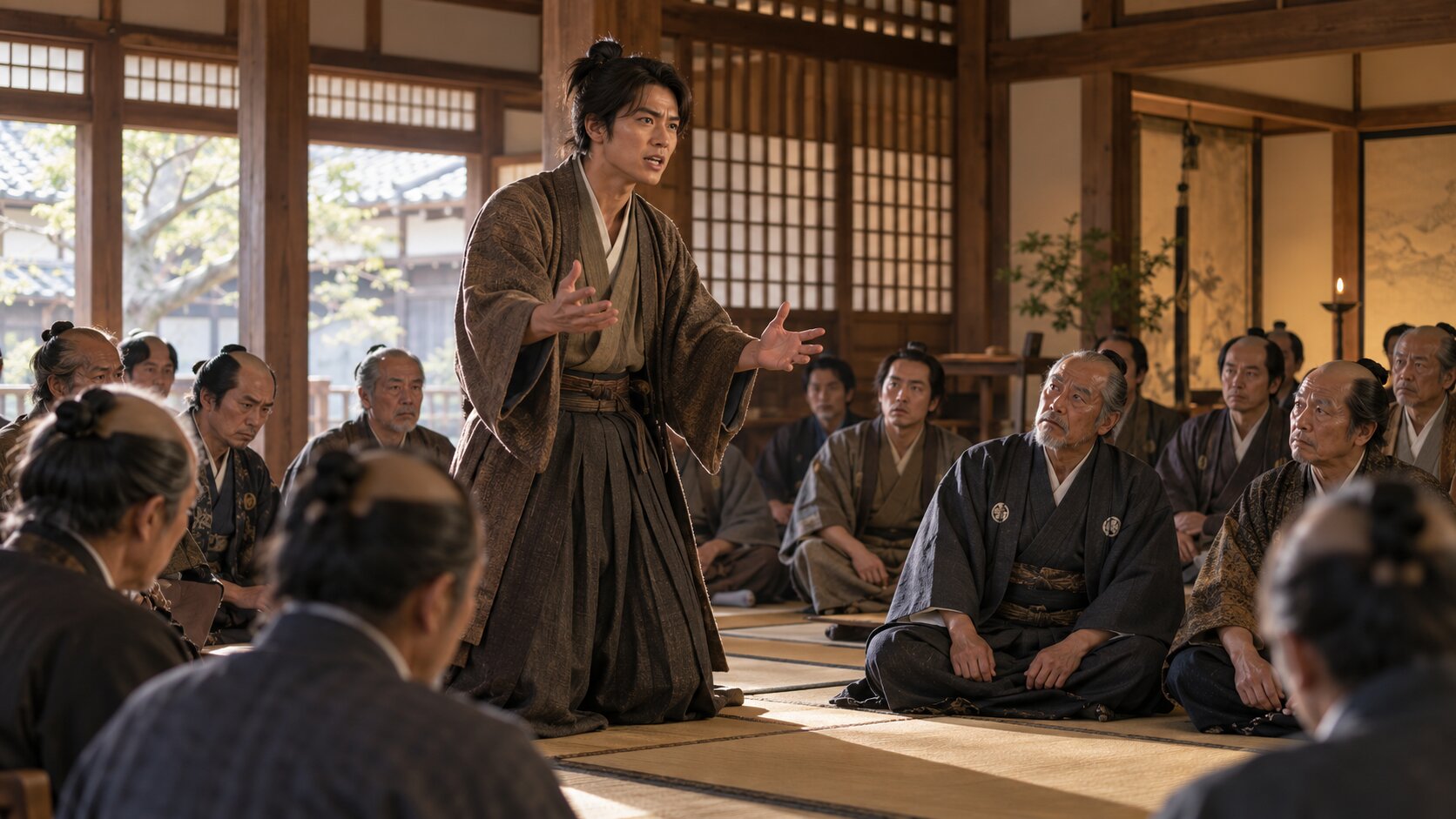
大勢が黙る広間で、
一人の若者だけが侃々と語る。
まっすぐな言葉は、時に場を揺らす。
In a hall where everyone is silent,
one young man speaks boldly and openly.
Straight words sometimes shake the room.
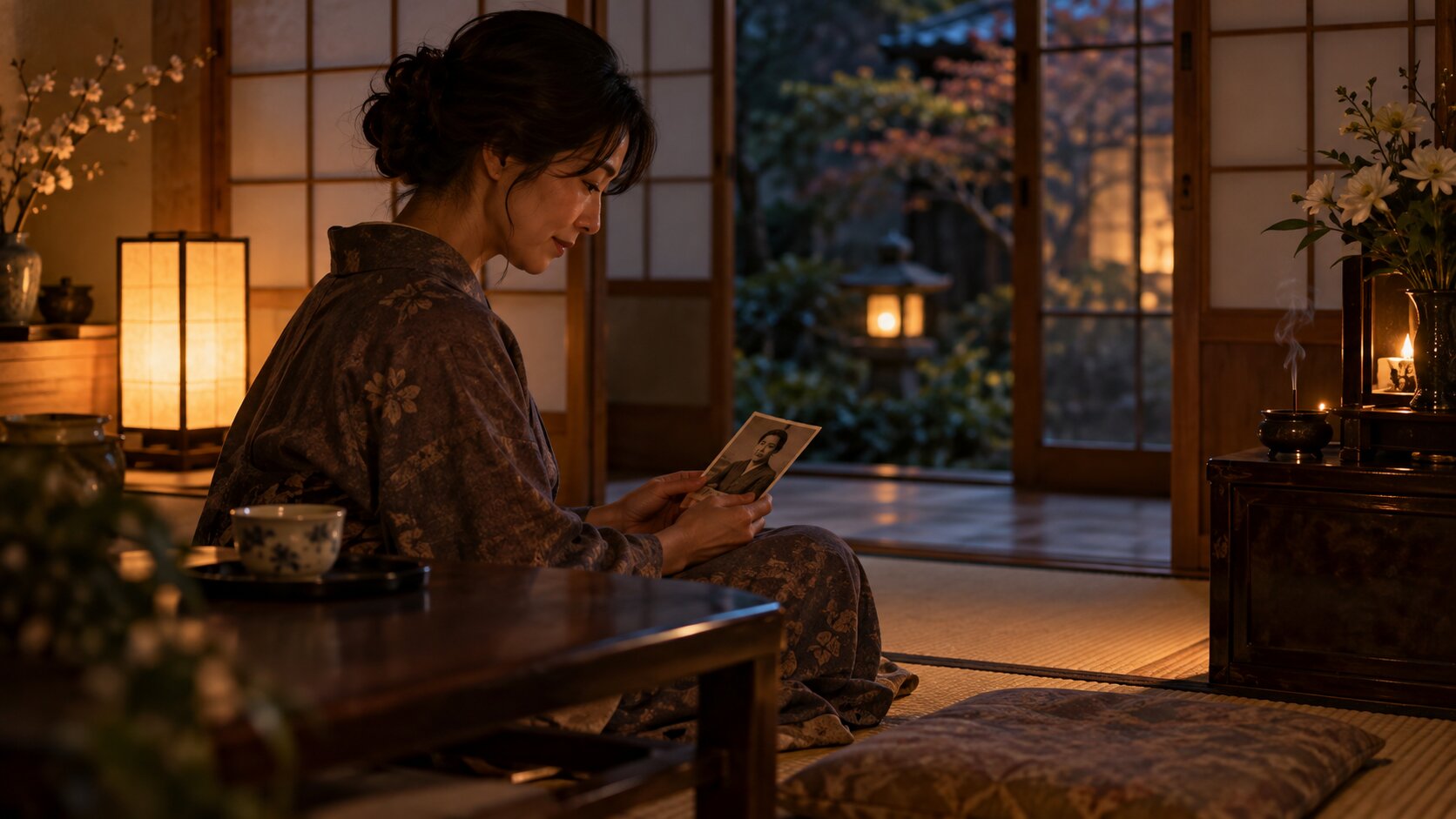
古い写真を膝に置き、
亡き人の声を静かに偲ぶ。
思い出すたび、姿は少し近くなる。
With an old photograph resting on the knees,
one quietly remembers a voice now gone.
Each remembrance brings that presence a little nearer.
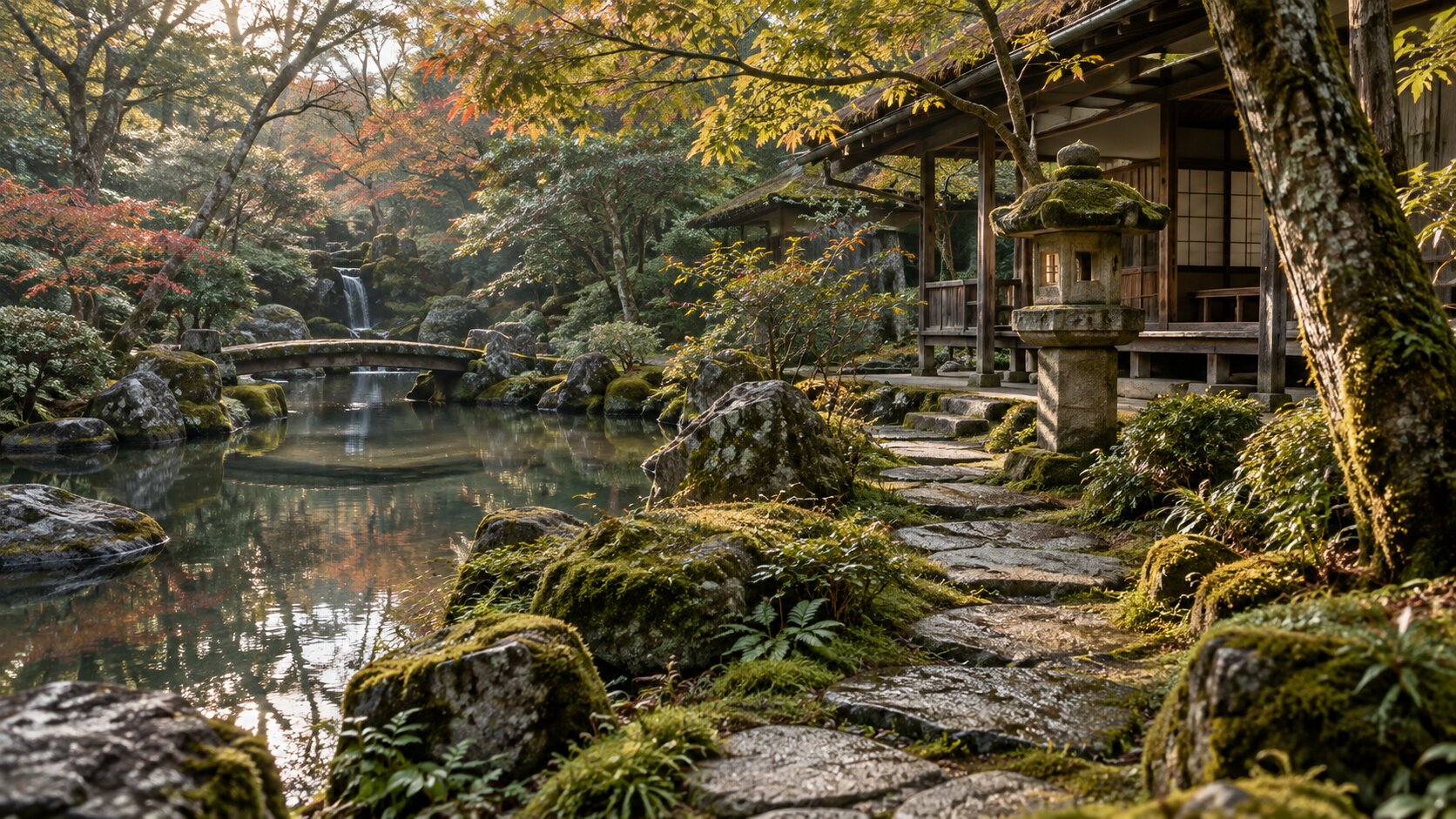
古い庭を直し過ぎず、
苔も割れた石もその侭にする。
時が作った美しさには、手を加えない。
The old garden is not repaired too perfectly;
the moss and cracked stones remain as they are.
Beauty made by time should not be overworked.
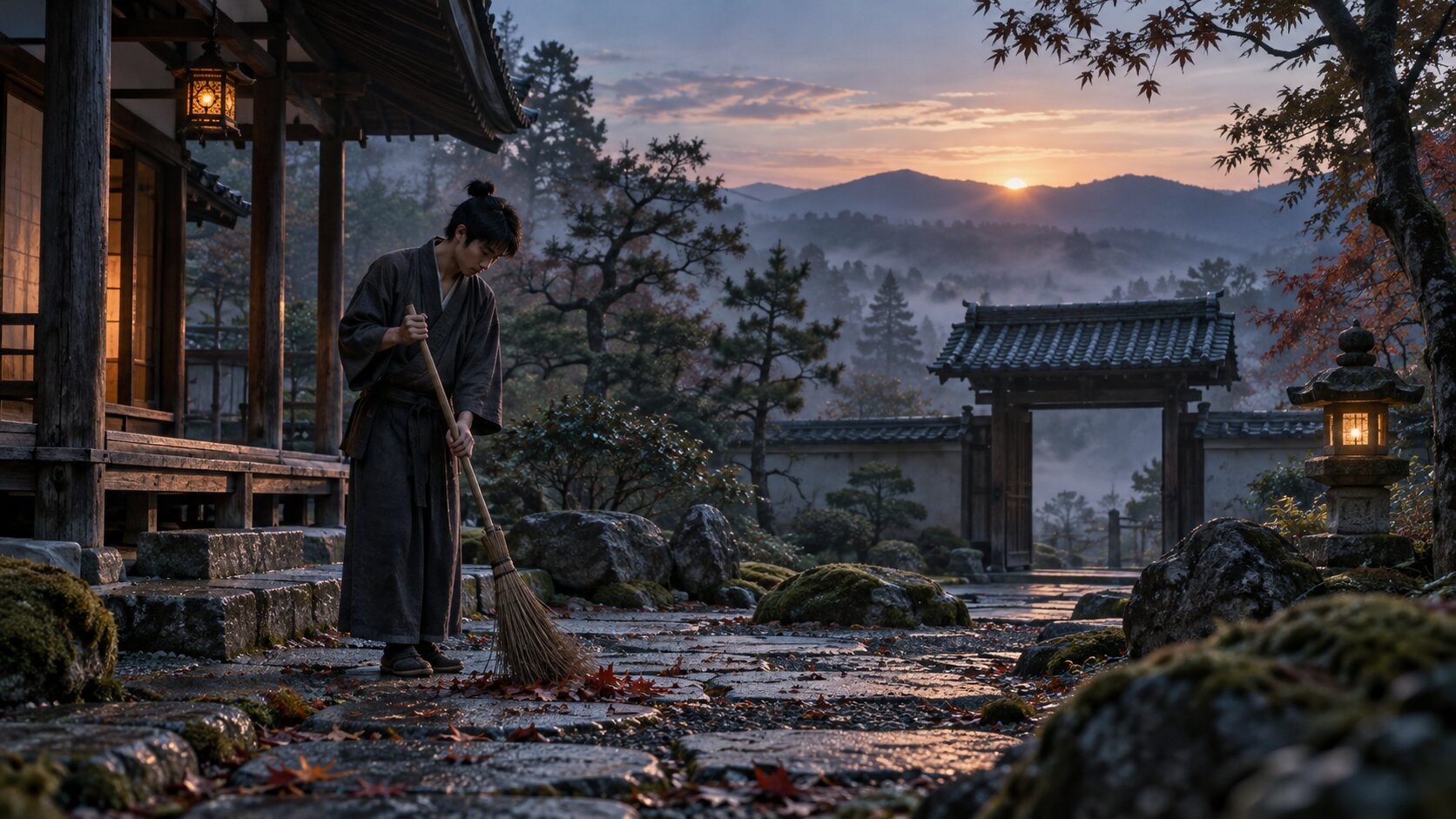
若者は身を脩めるため、
夜明け前から庭を掃き始める。
心を整える道は、日々の所作にある。
To cultivate himself,
a young man begins sweeping before dawn.
The path to an ordered heart lies in daily practice.
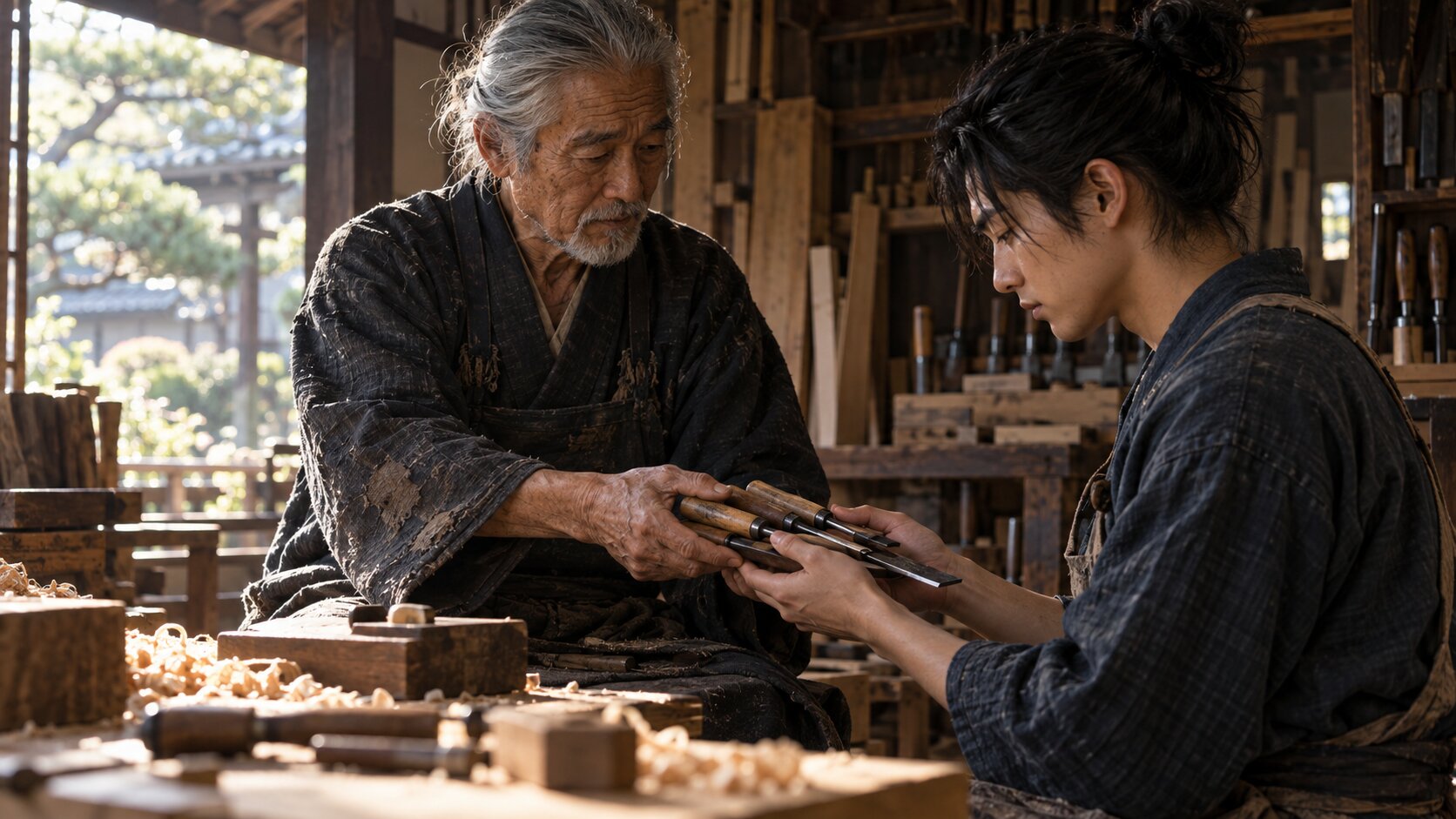
老いた職人は倅の手を見つめ、
初めて道具を任せる。
受け継がれるものは、技だけではない。
The aging craftsman watches his son’s hands
and entrusts him with the tools for the first time.
What is inherited is more than skill.