A note on the wall
After looking
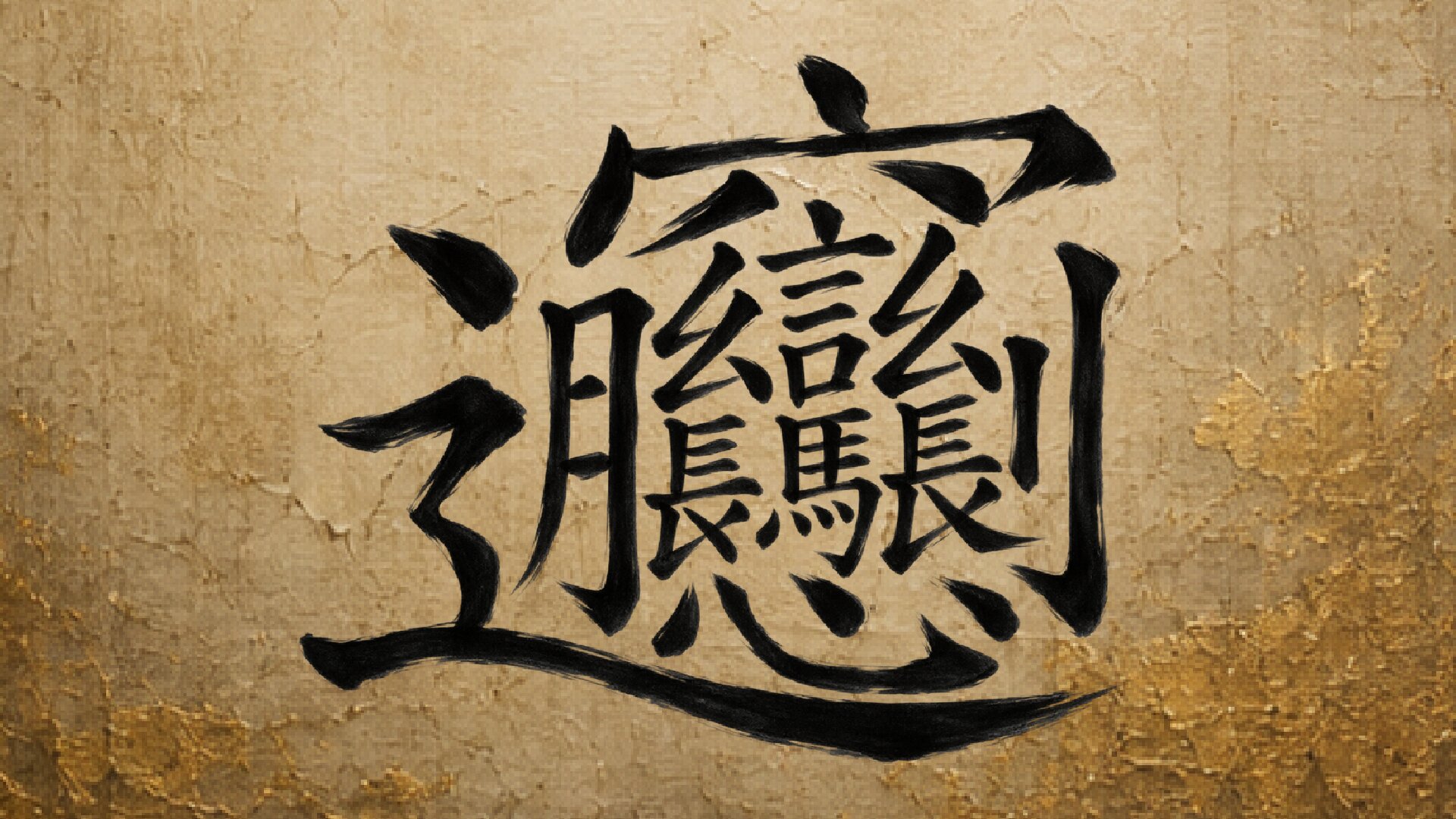
この字は、中国・陝西省の名物、ビャンビャン麺にまつわるものです。 見た目の複雑さでよく知られています。
成り立ちははっきりしません。古い辞書には載っておらず、 代金のかわりにこの字を作った、といった物語がいくつか伝わっています。 いずれも伝承であり、確かな古代の語源として残っているわけではありません。
書き方も一つではなく、画数の数え方も形によって変わります。
ここでは、漢字の世界の広がりを示す一点として展示しています。 日本語の語彙として覚える必要はありません。
This character is associated with biángbiáng noodles (ビャンビャン麺), a wide hand-pulled wheat noodle from Shaanxi, China. It is famous for its extraordinary visual complexity.
Its origin is uncertain. It does not appear in classical dictionaries, and the stories around it — a scholar inventing the character in place of payment, among others — remain folklore rather than a securely documented ancient etymology.
Different written forms exist, so descriptions of its exact structure and stroke count can vary.
It is shown here as a fascinating example from the broader world of Chinese characters, not as Japanese vocabulary the learner needs to master.
はじめは、見通せない壁のように見えたでしょう。153 のレッスンのあとでは、そのなかにすでに構造が見えています。 At the beginning, this would have looked impossible. After 153 lessons, you can already see structure inside it.
書けなくても大丈夫です。
You don’t have to learn to write it.
Now try it yourself 今度は自分で書いてみましょう
Take a pen and a blank sheet of paper. Without looking at the character, see if you can create biáng by following the hints in the song. Don’t worry about making it perfect — just listen, remember the components, and see how close you can get.
ペンと白い紙を用意してください。字を見ないで、歌のヒントを聞きながら biáng の字を組み立ててみましょう。完璧に書けなくてもかまいません。歌を聞いて、覚えている部分をつなげながら、どこまで書けるか試してみてください。
When you’re finished, look back at the character and compare. How much of its structure did you remember?
書き終わったら、もう一度字を見て比べてみましょう。どのくらい構造を覚えていましたか。