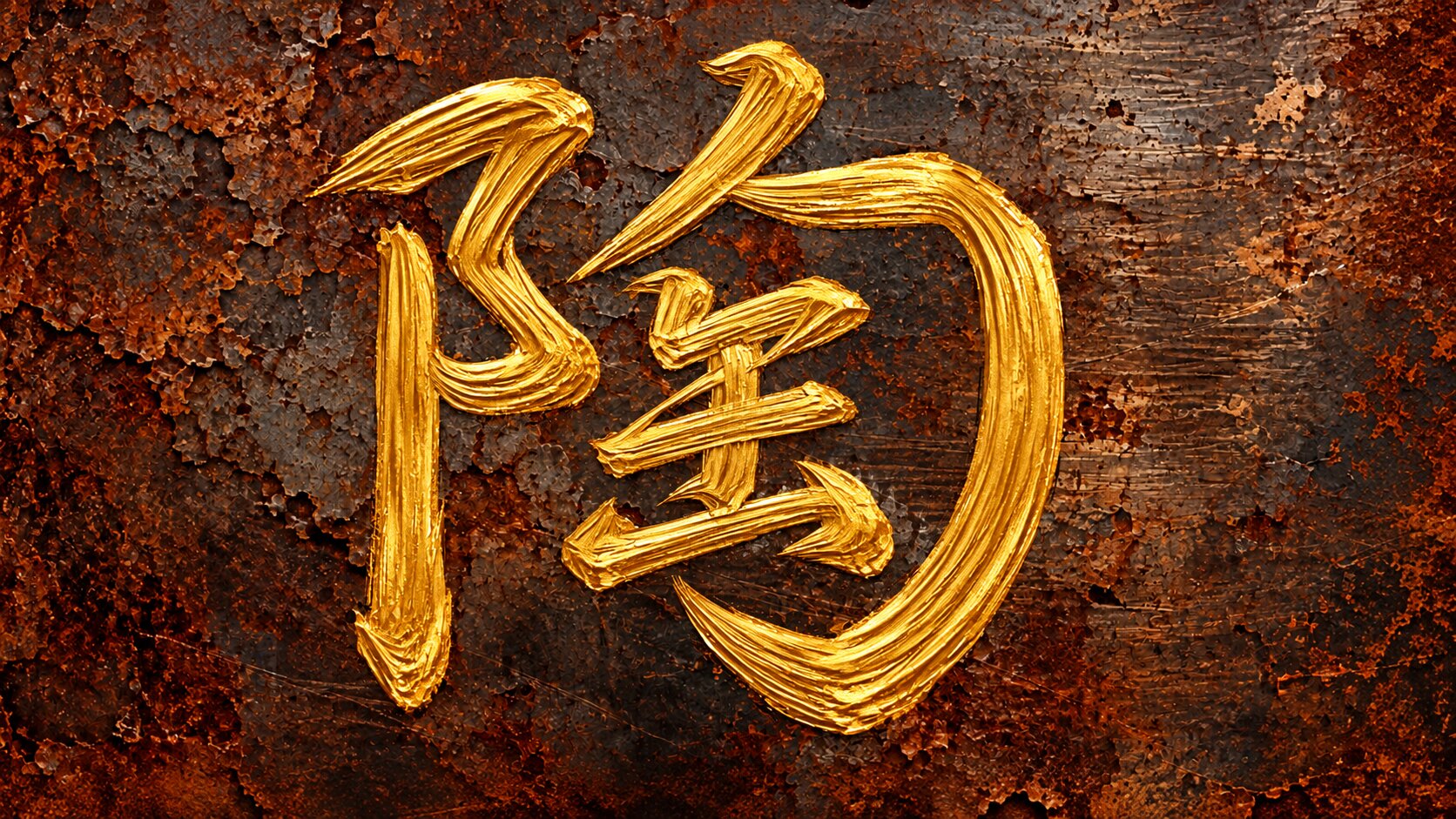
💡 Tip: Click the featured kanji to view stroke order animations
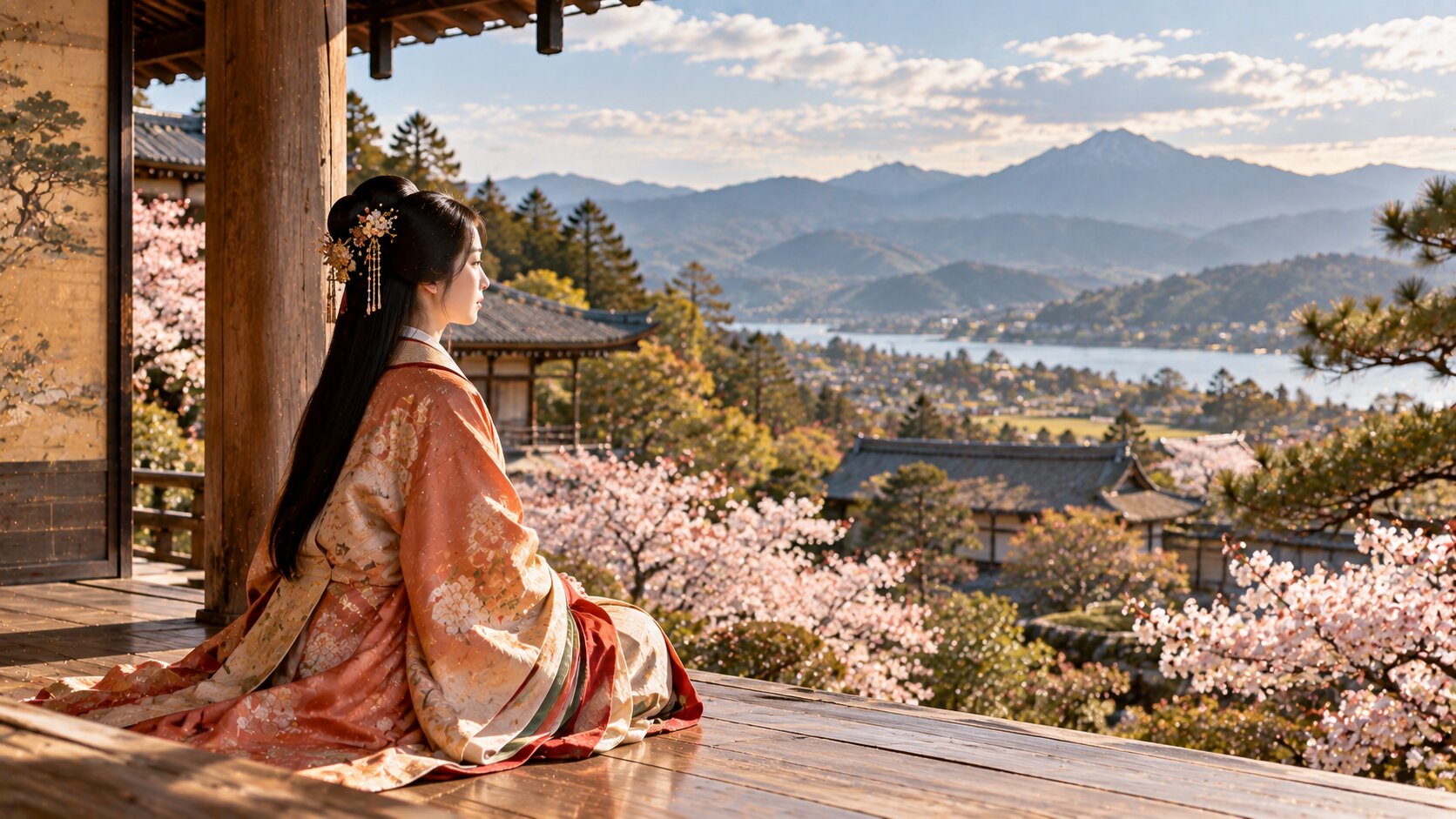
春の御殿の縁側で、
媛は遠い山を静かに見つめる。
華やかな衣の内にも、誰にも見えぬ願いがある。
From the veranda of the spring palace,
a noble lady quietly gazes toward the distant mountains.
Even beneath splendid robes, unseen wishes remain.
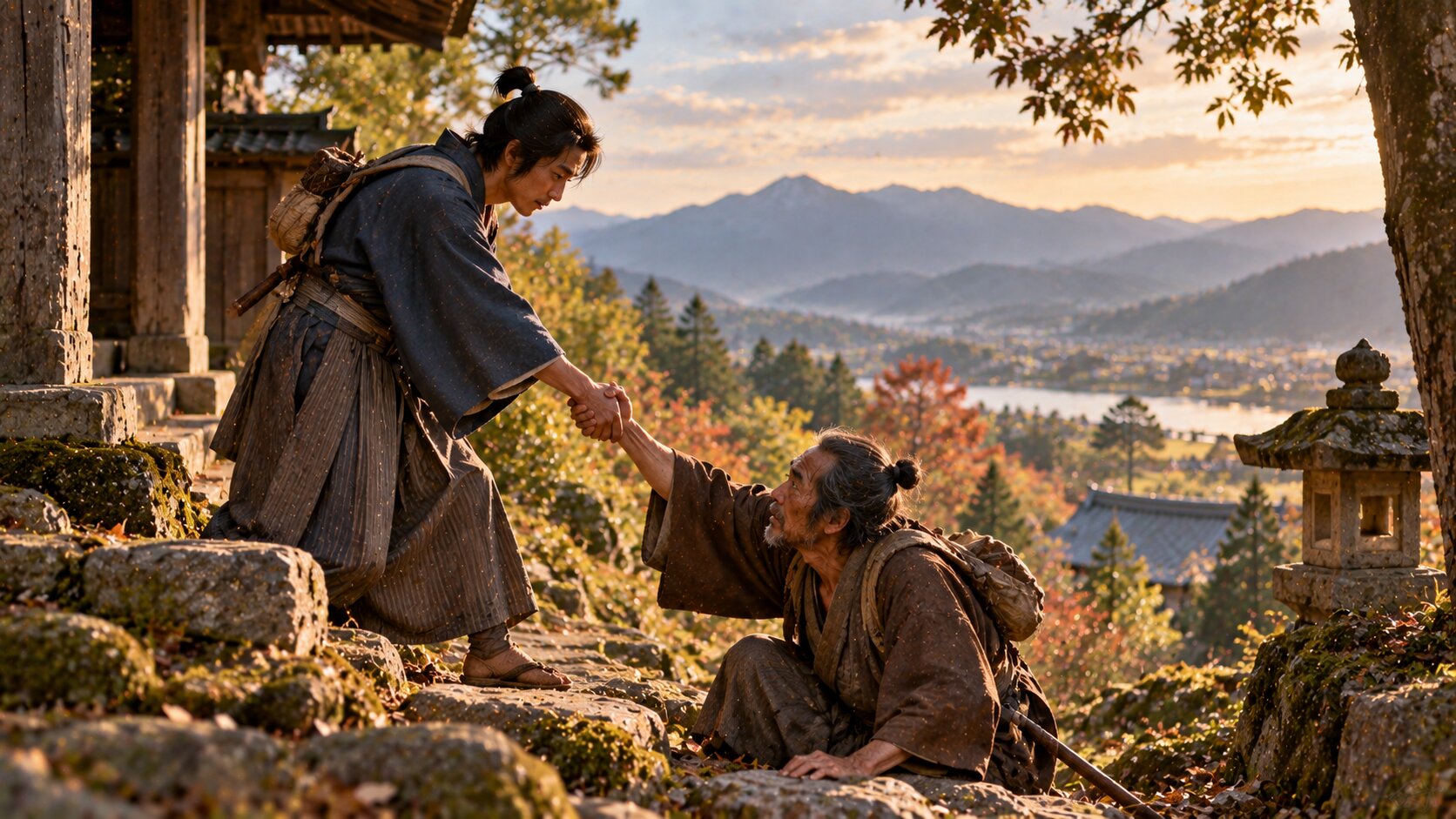
倒れた荷車を前に、
旅人たちは黙って手を貸し合う。
援ける力は、一人の重さを皆で持つこと。
Before the overturned cart,
the travellers silently lend one another their hands.
To support someone is to share what one person cannot carry alone.
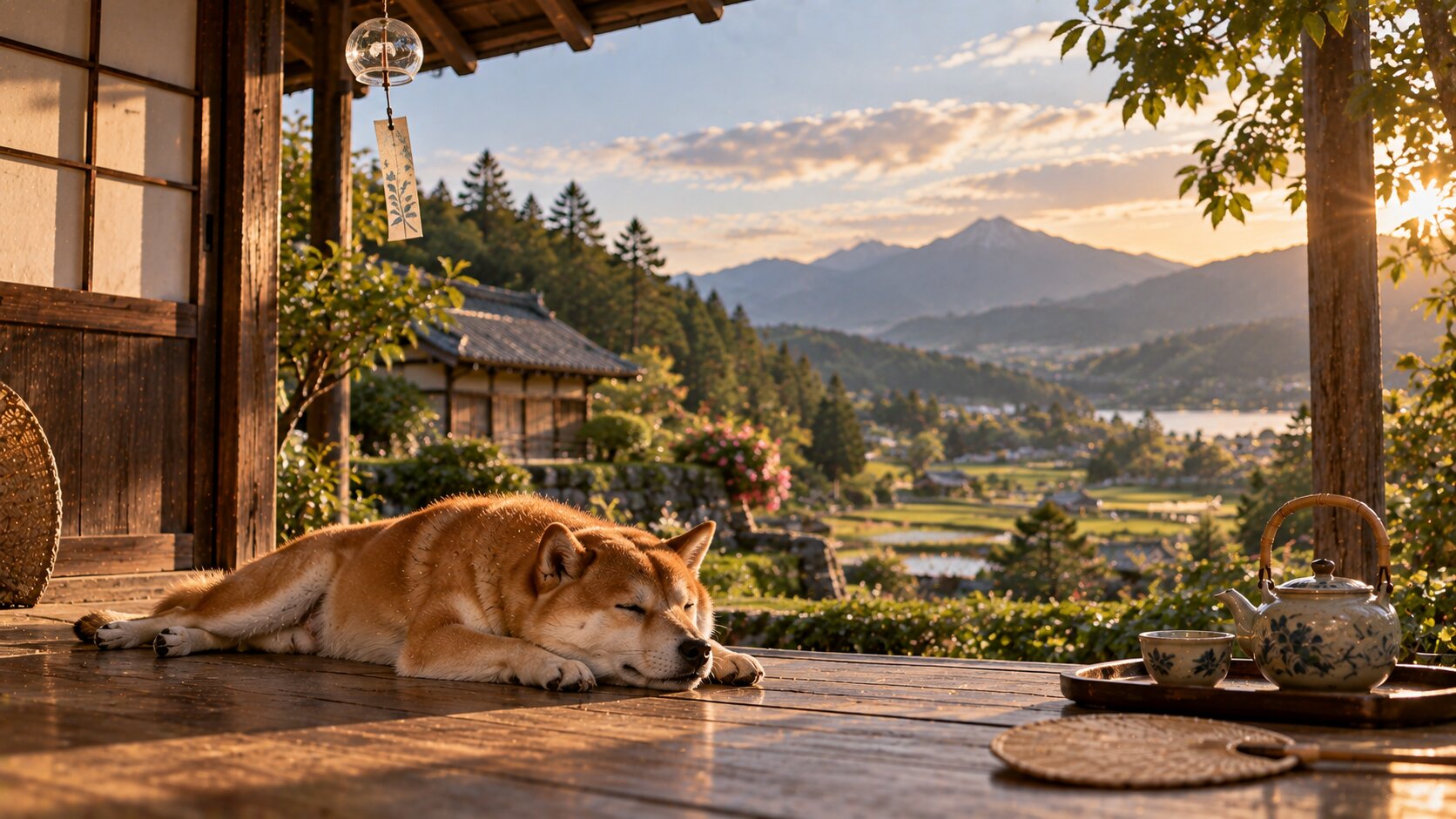
長い一日を終え、
職人は鉢巻きを緩めて空を見上げる。
張りつめた心にも、夕暮れは休みを与える。
At the end of a long day,
the craftsman loosens his headband and looks toward the sky.
Even a strained heart is given rest by evening.
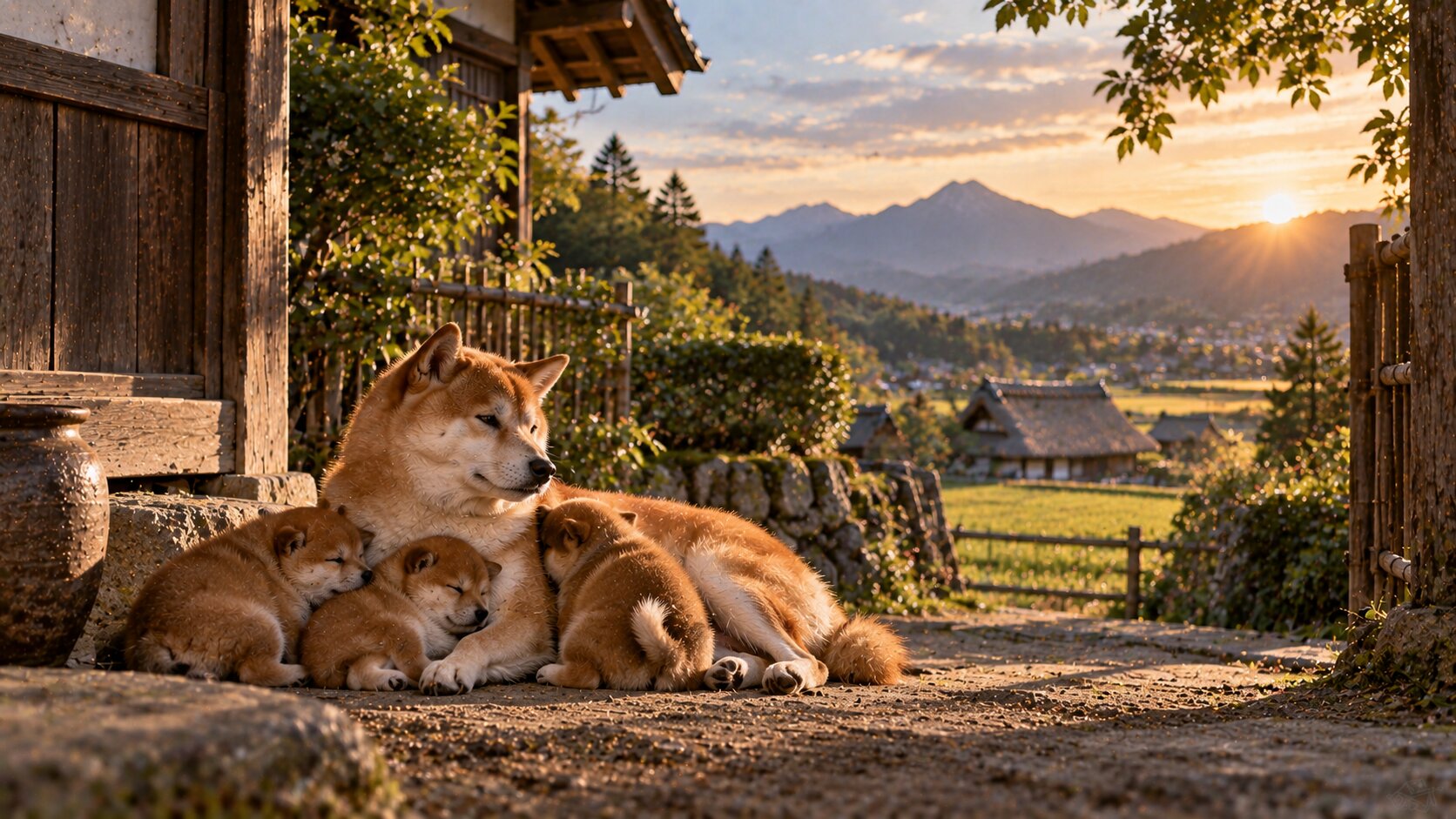
渡り鳥は群れに属し、
夕空を一つの形となって進む。
共に行く命は、同じ風を分け合う。
Migrating birds belong to the flock,
moving through the evening sky as one form.
Lives travelling together share the same wind.
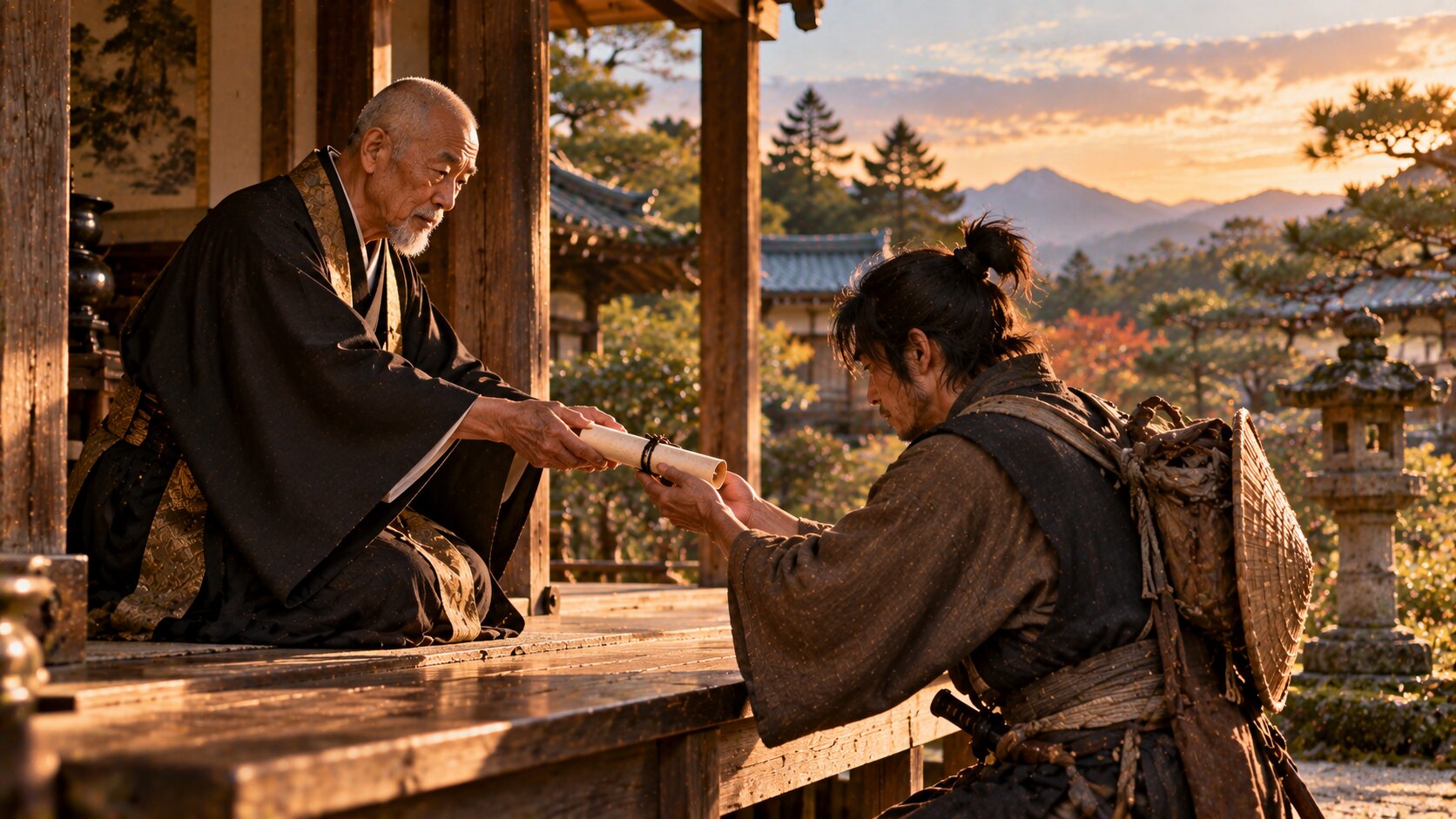
老いた師は弟子に筆を渡し、
残りの仕事を静かに嘱す。
託されたものには、信頼の重さがある。
The aging master passes his brush to the disciple
and quietly entrusts him with the unfinished work.
What is entrusted carries the weight of faith.
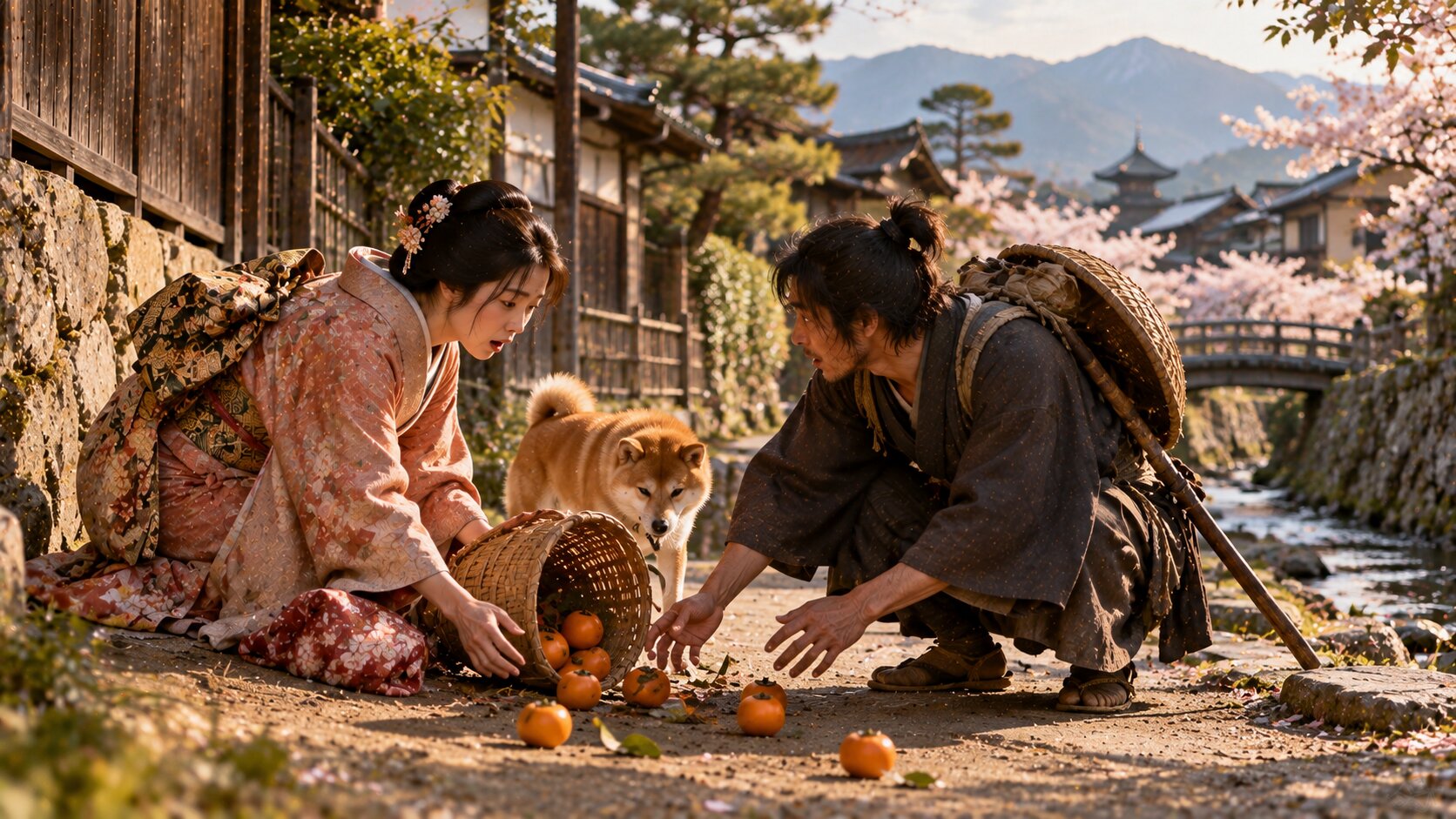
偶雨宿りした茶屋で、
昔の友と向かい合う。
長い年月も、一つの偶然に折り畳まれる。
By chance, while sheltering from the rain at a teahouse,
one meets an old friend.
Long years can fold themselves into a single coincidence.
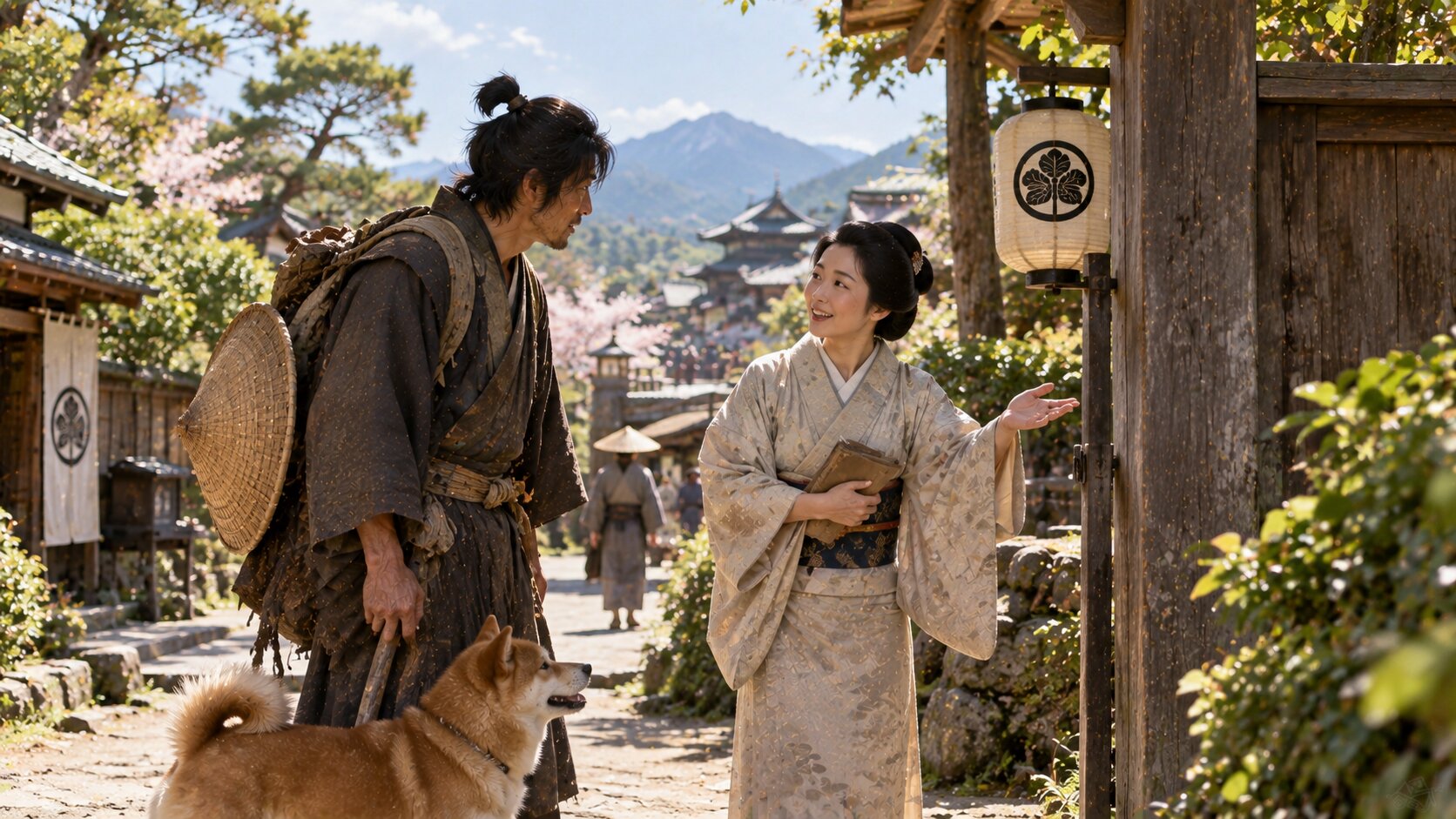
山道で見知らぬ旅人に遇い、
互いに水を分けて別れる。
短い出会いにも、人の温かさは残る。
Meeting a stranger on the mountain road,
the two share water and then part.
Even a brief encounter can leave human warmth behind.
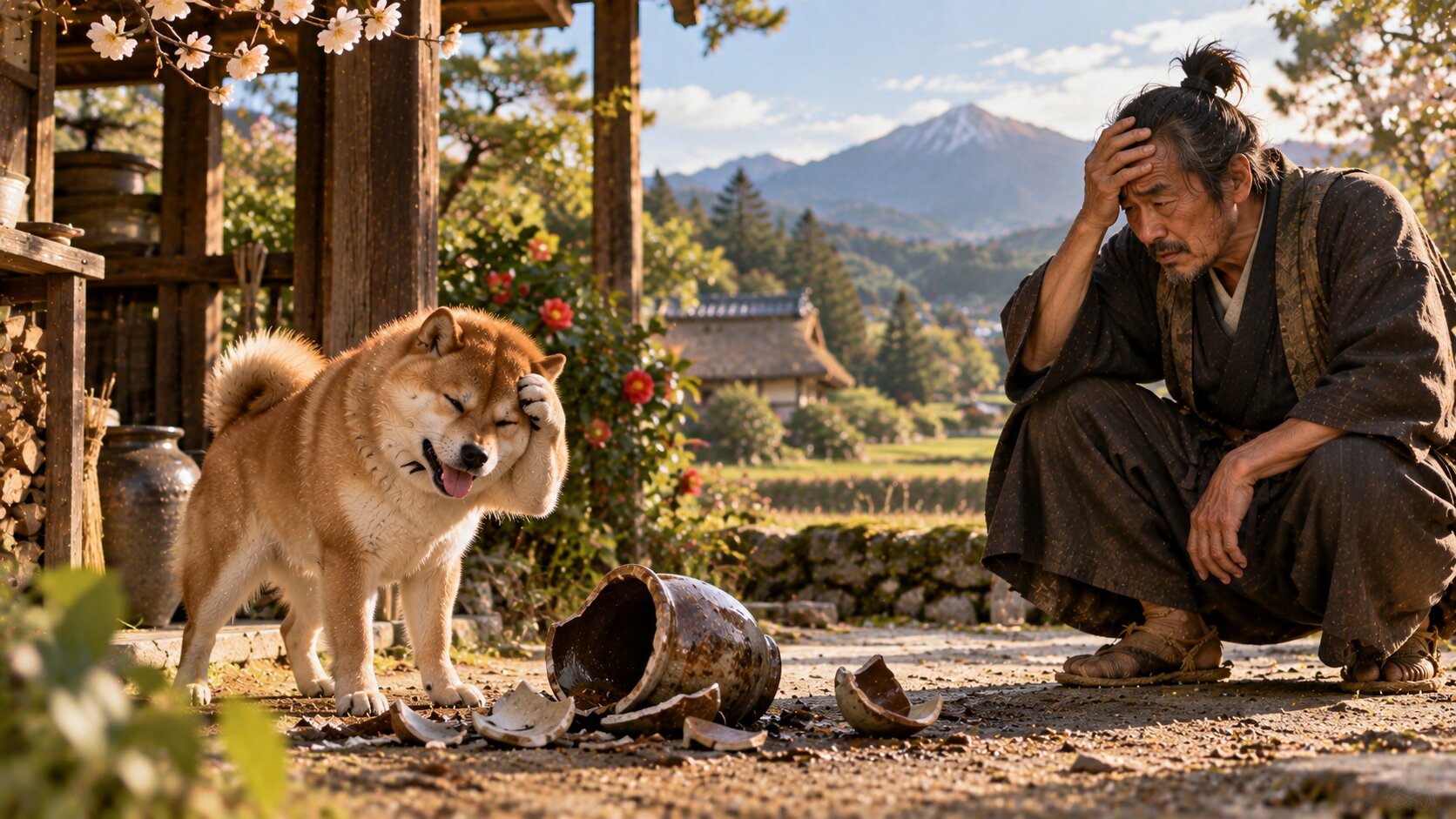
足元の花を踏みながら、
男は遠くの宝だけを探している。
愚かさは、近くの美しさを見失うこと。
Stepping upon the flowers at his feet,
a man searches only for distant treasure.
Foolishness is losing sight of the beauty close at hand.
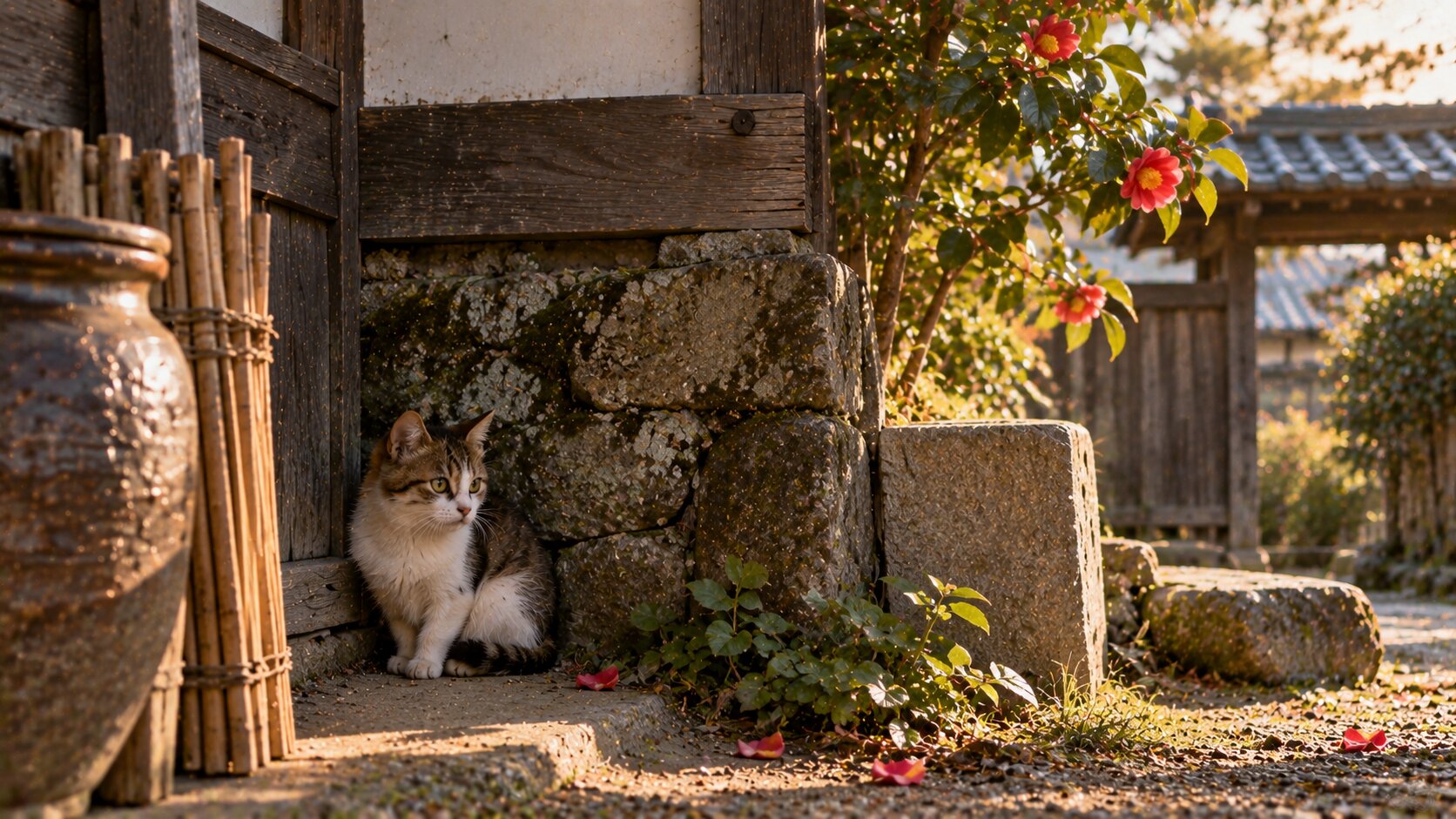
古い部屋の隅に、
使われなくなった琴が置かれている。
忘れられたものにも、音の記憶が眠る。
In the corner of an old room
rests a koto no longer played.
Even forgotten things hold sleeping memories of sound.
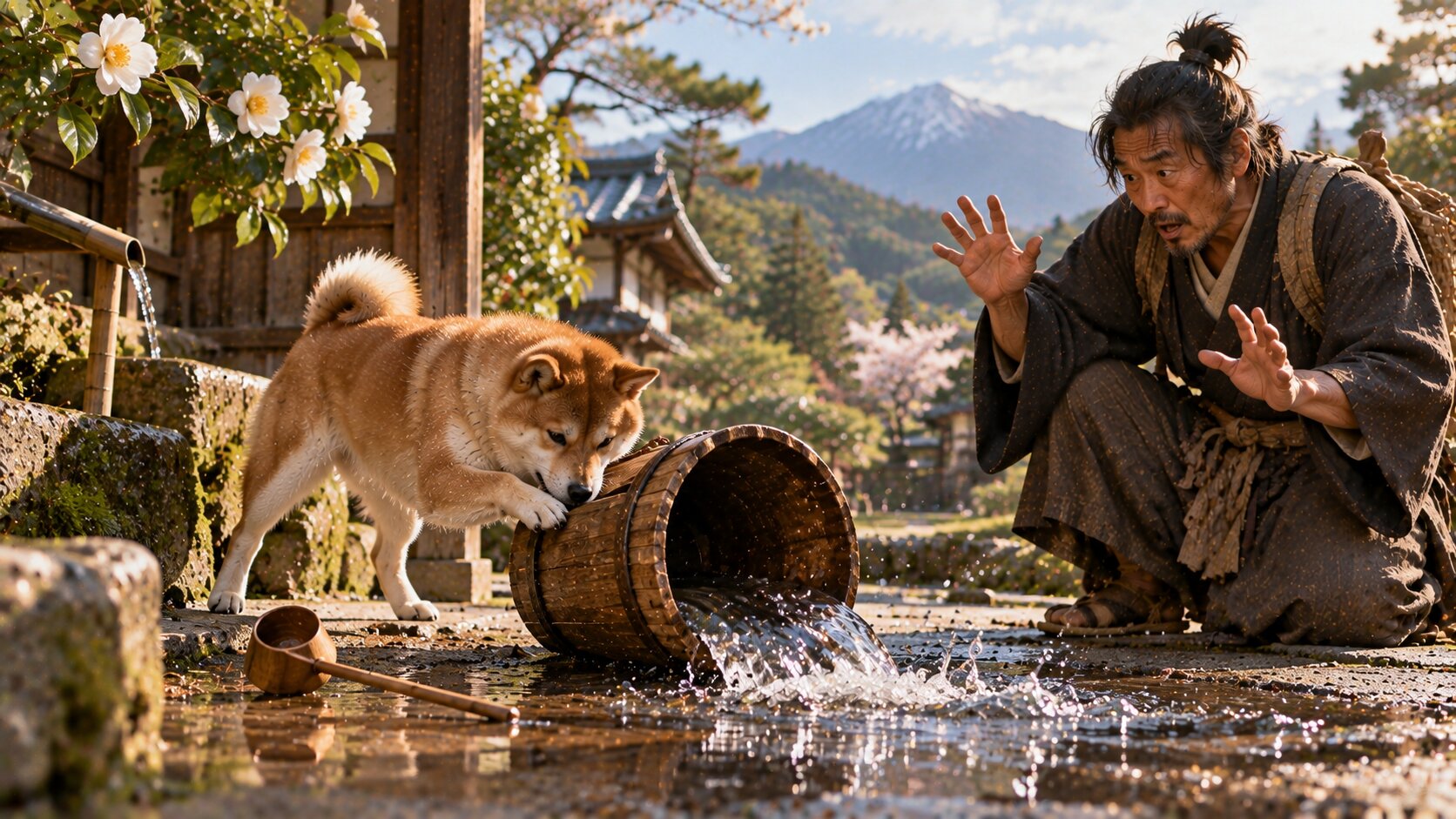
強い川の流れに逆らい、
魚は何度も岩間を上ってゆく。
進むべき方角を知る命は、流れに従わない。
Resisting the strong river current,
a fish repeatedly climbs through the rocks.
A life that knows its direction does not always follow the flow.
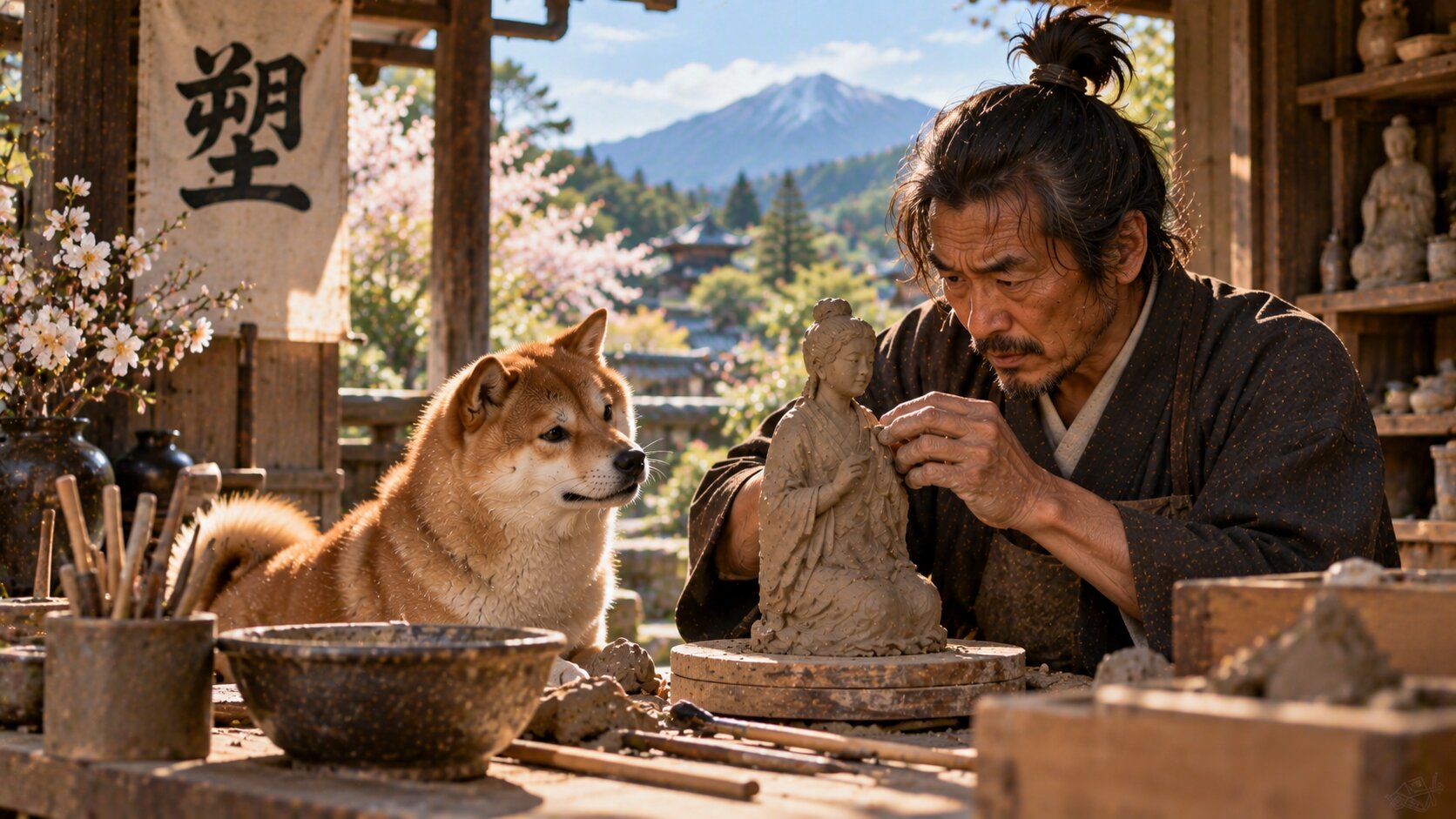
湿った粘土を掌で押し、
職人は人の顔を塑ってゆく。
形のない思いが、少しずつ姿を得る。
Pressing wet clay between his palms,
the craftsman models a human face.
A formless thought gradually receives a shape.
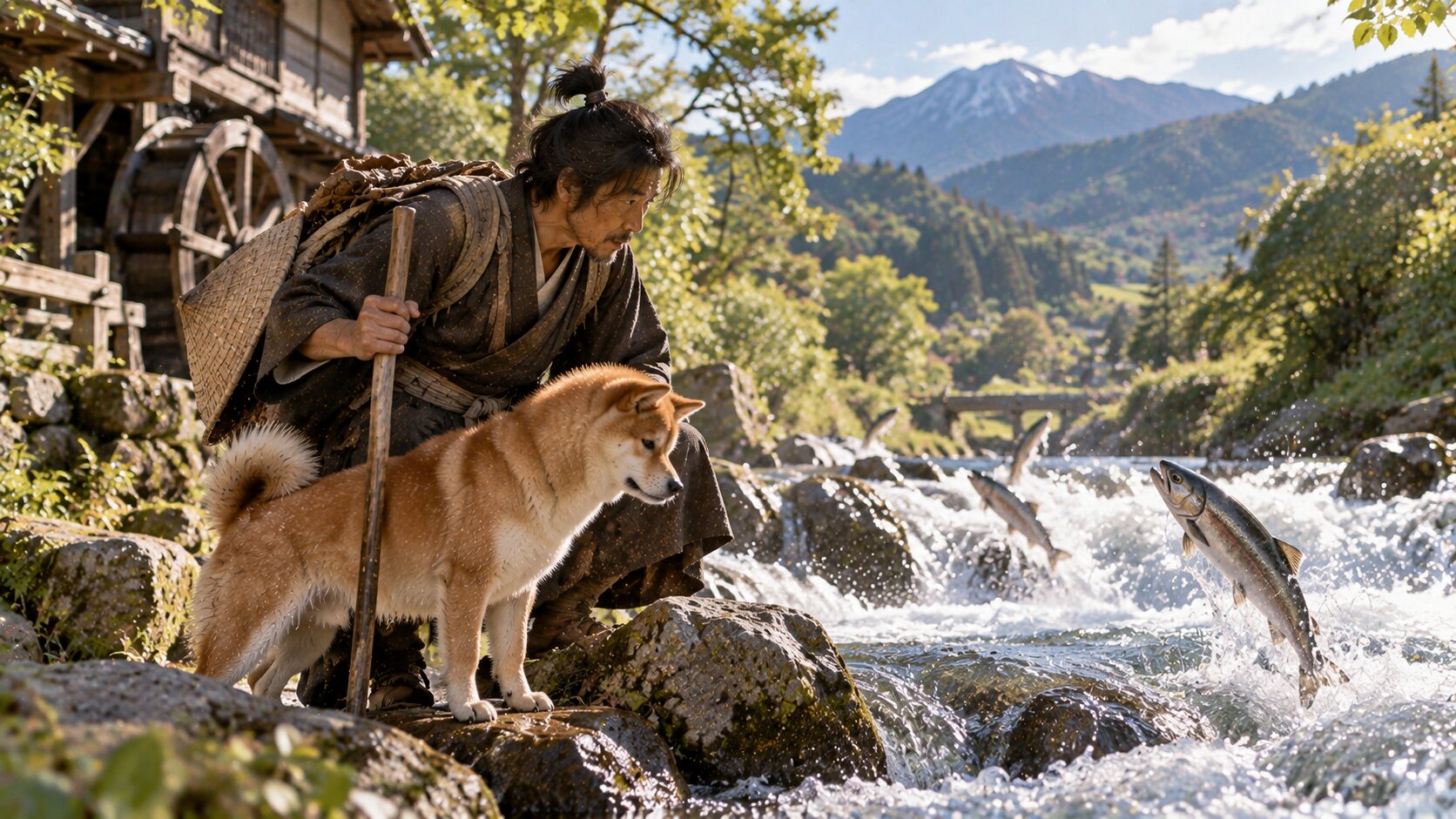
小舟で川を遡ると、
町の音が次第に遠ざかる。
流れを戻れば、始まりの静けさに近づく。
Travelling upstream in a small boat,
the sounds of the town slowly fade.
To follow the current backward is to approach the silence of its source.
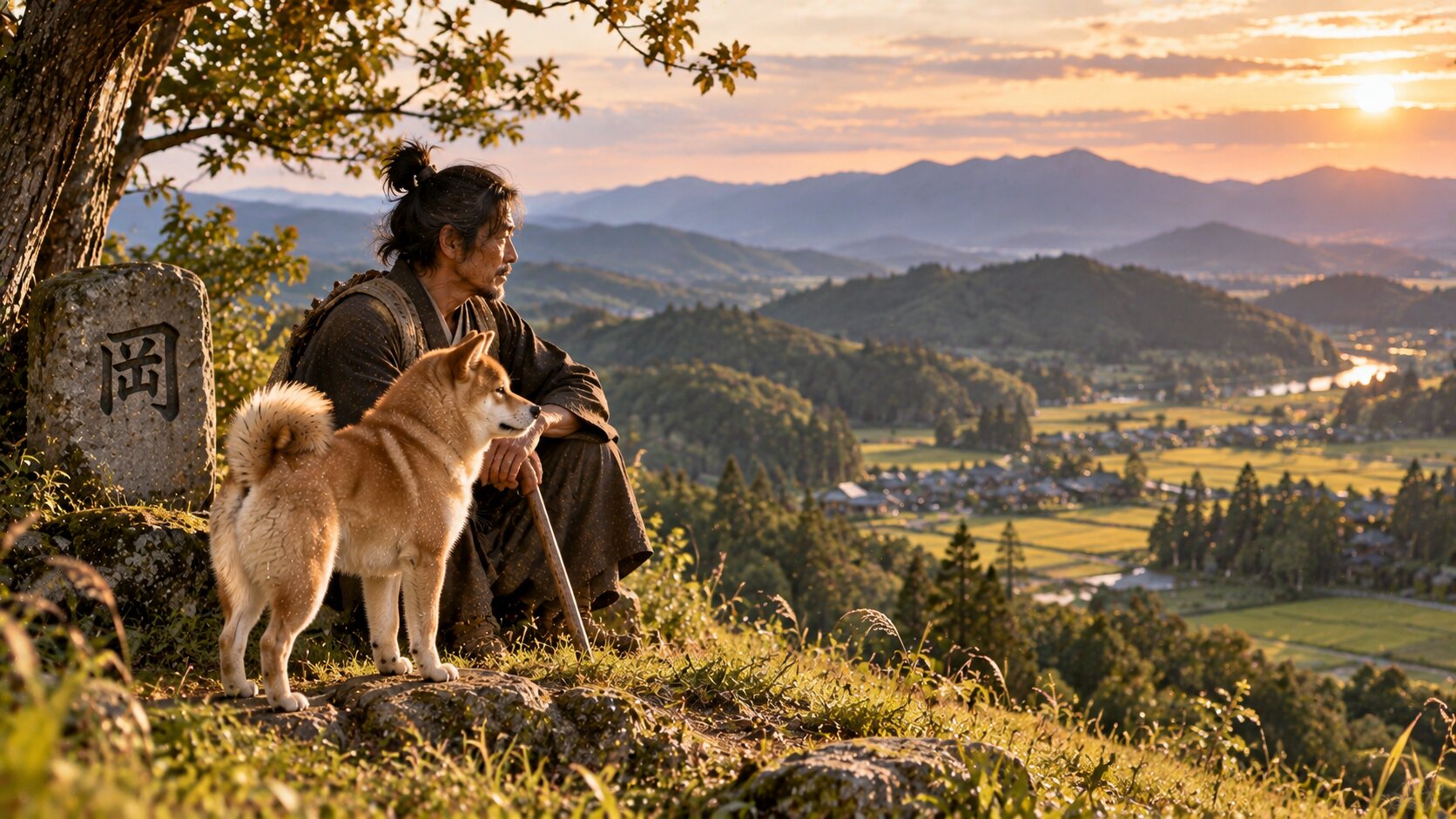
春の岡に菜の花が広がり、
子どもたちの声が風に運ばれる。
低い丘にも、空は大きく開いている。
Rapeseed flowers spread across the spring hill,
and children’s voices travel upon the wind.
Even above a low hill, the sky opens wide.
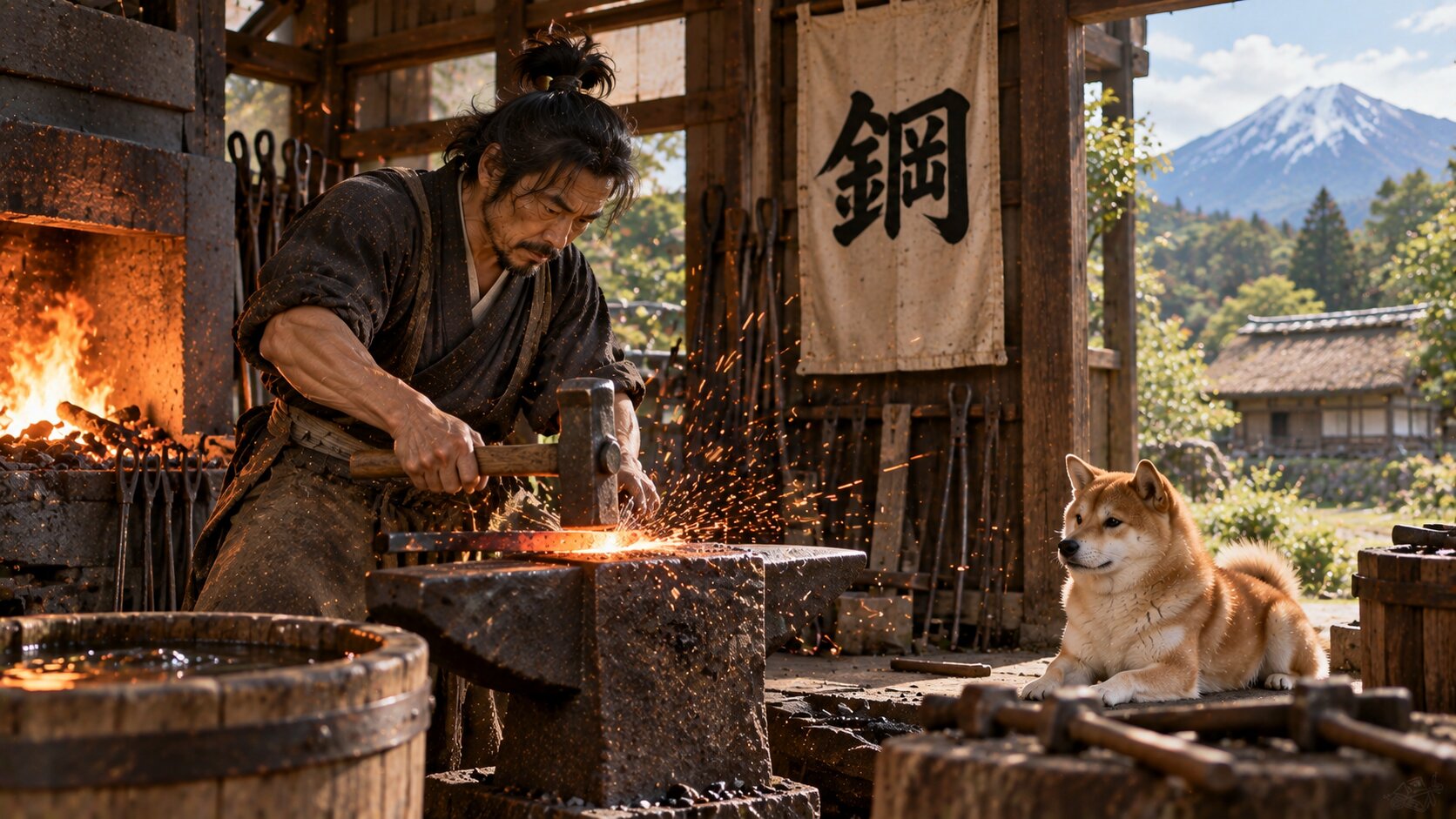
炉から取り出された鋼が、
槌の下で赤く火花を散らす。
堅さは、火と打撃を越えて生まれる。
Steel taken from the furnace
scatters red sparks beneath the hammer.
Hardness is born through fire and repeated blows.
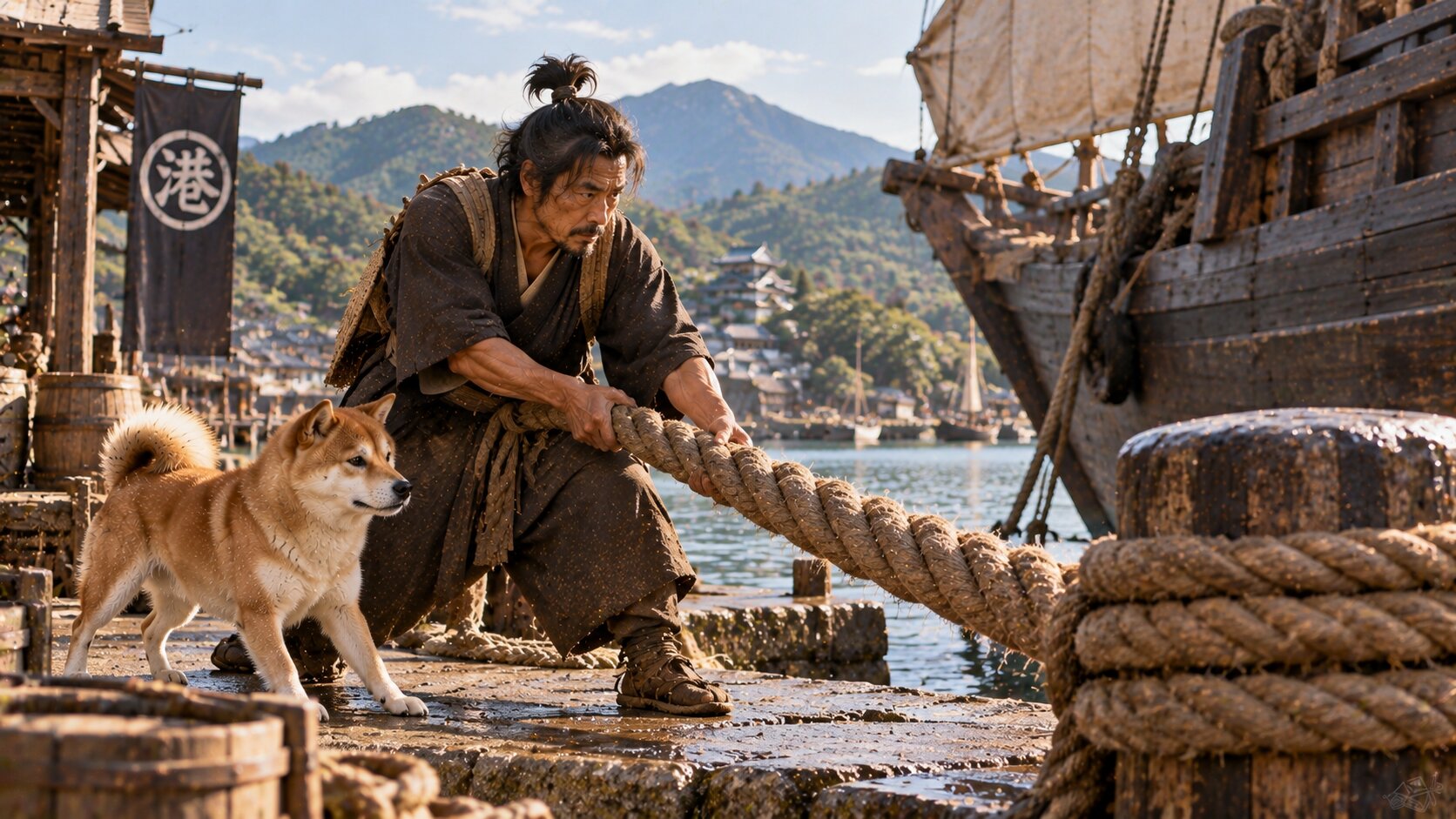
荒波の港で綱を握り、
漁師たちは舟を岸へ引き寄せる。
一本の縄に、幾つもの力が集まる。
Gripping a rope in the stormy harbor,
the fishermen draw the boat toward shore.
Many strengths gather within a single line.
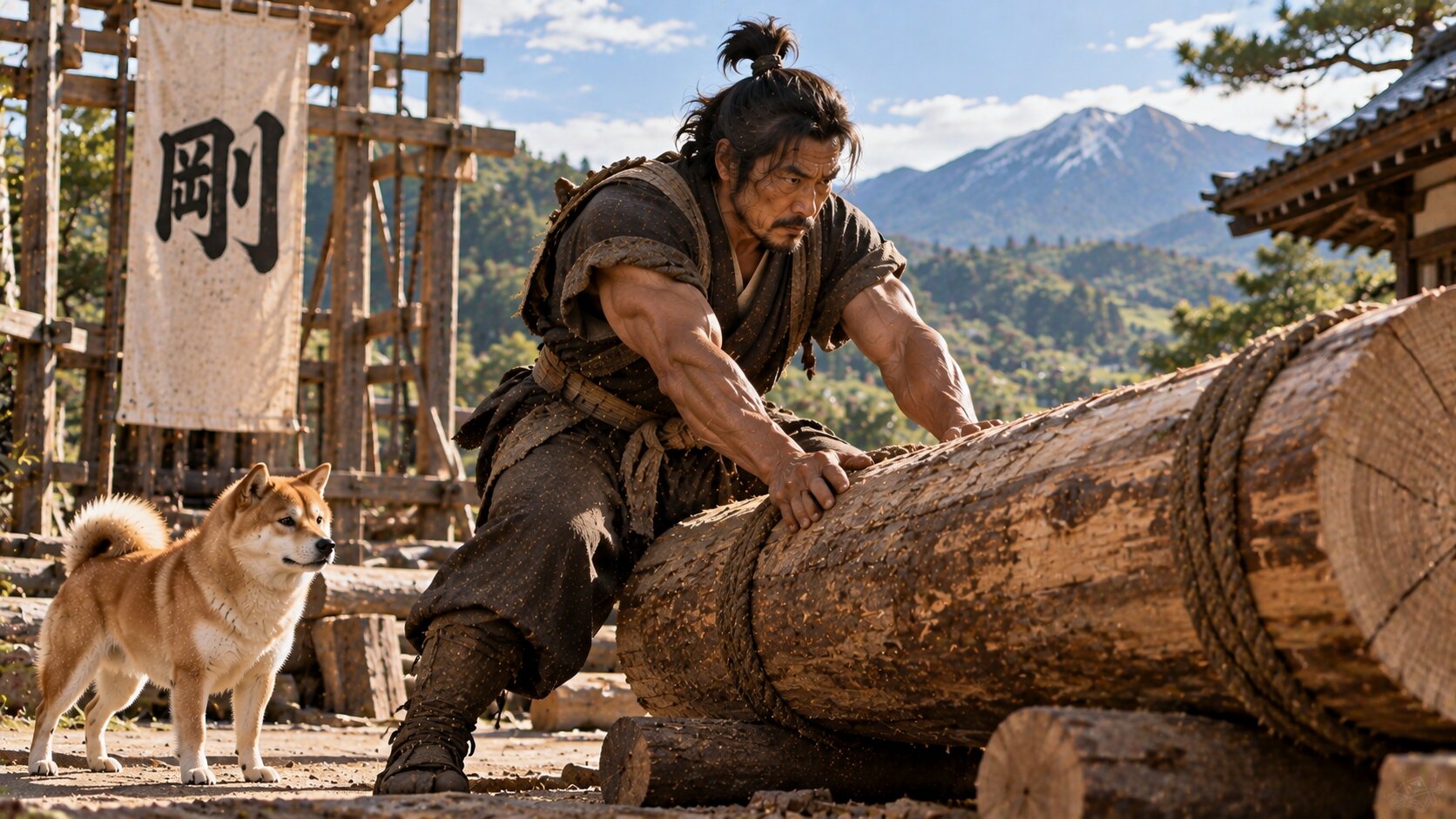
冬の滝に打たれながら、
修行者は姿勢を崩さず立っている。
剛さは、耐える心に形を与える。
Standing beneath the winter waterfall,
the ascetic does not lose his posture.
Resolve gives visible form to endurance.
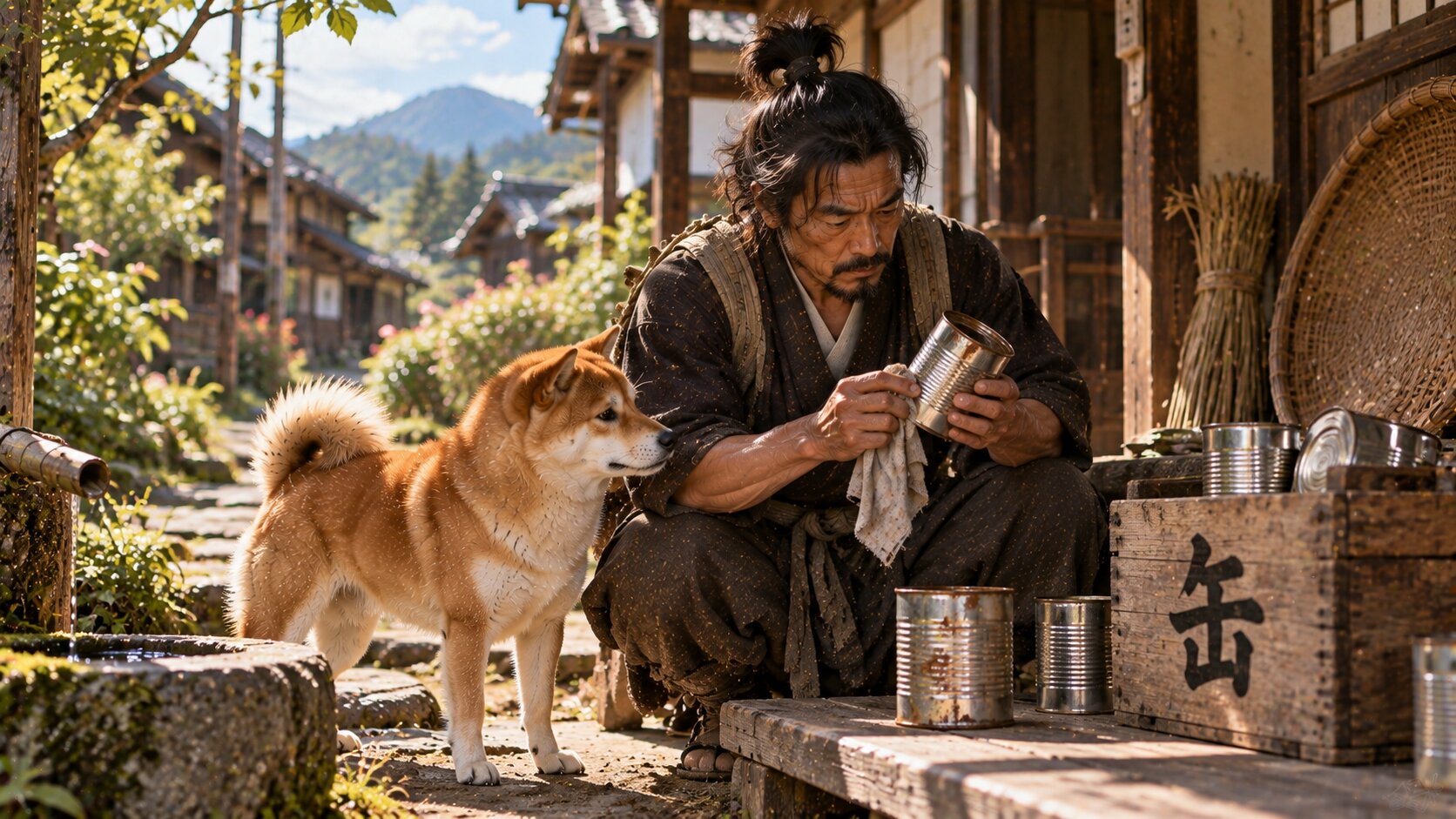
古い茶店の棚に、
色あせた茶の缶が並んでいる。
使われた器には、暮らしの手触りが残る。
Faded tea tins line
the shelf of an old teahouse.
Objects long used retain the touch of daily life.
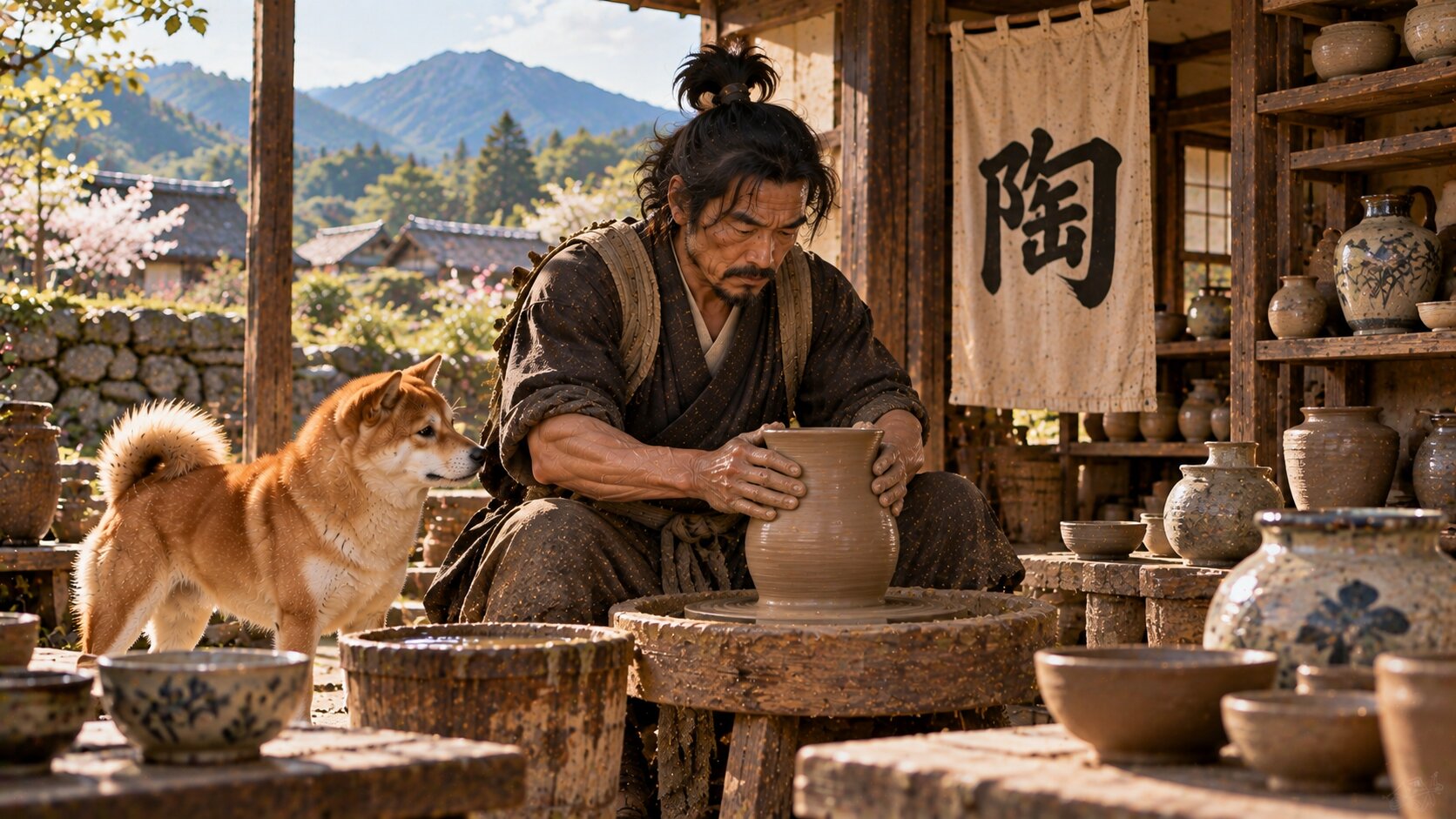
登り窯の火が夜通し燃え、
陶工は入口の色を見守っている。
土は、炎の中で初めて器となる。
The climbing kiln burns through the night,
while the potter watches the color at its mouth.
Only within fire does earth become a vessel.
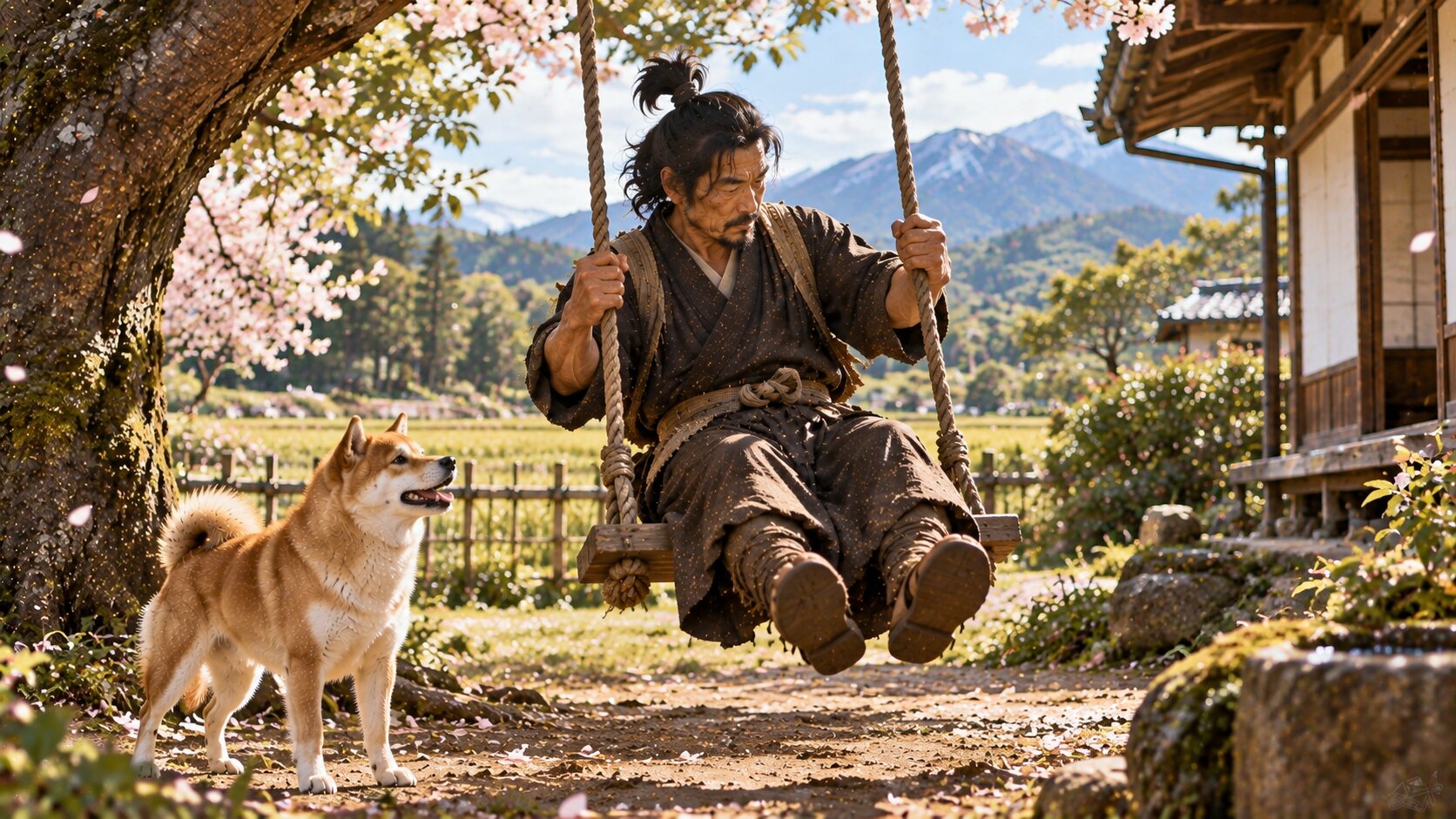
風鈴が軒先で揺れ、
夏の午後に細い音を落とす。
動くものが、静けさを深くすることもある。
A wind chime sways beneath the eaves,
dropping a delicate sound into the summer afternoon.
Sometimes movement makes stillness deeper.
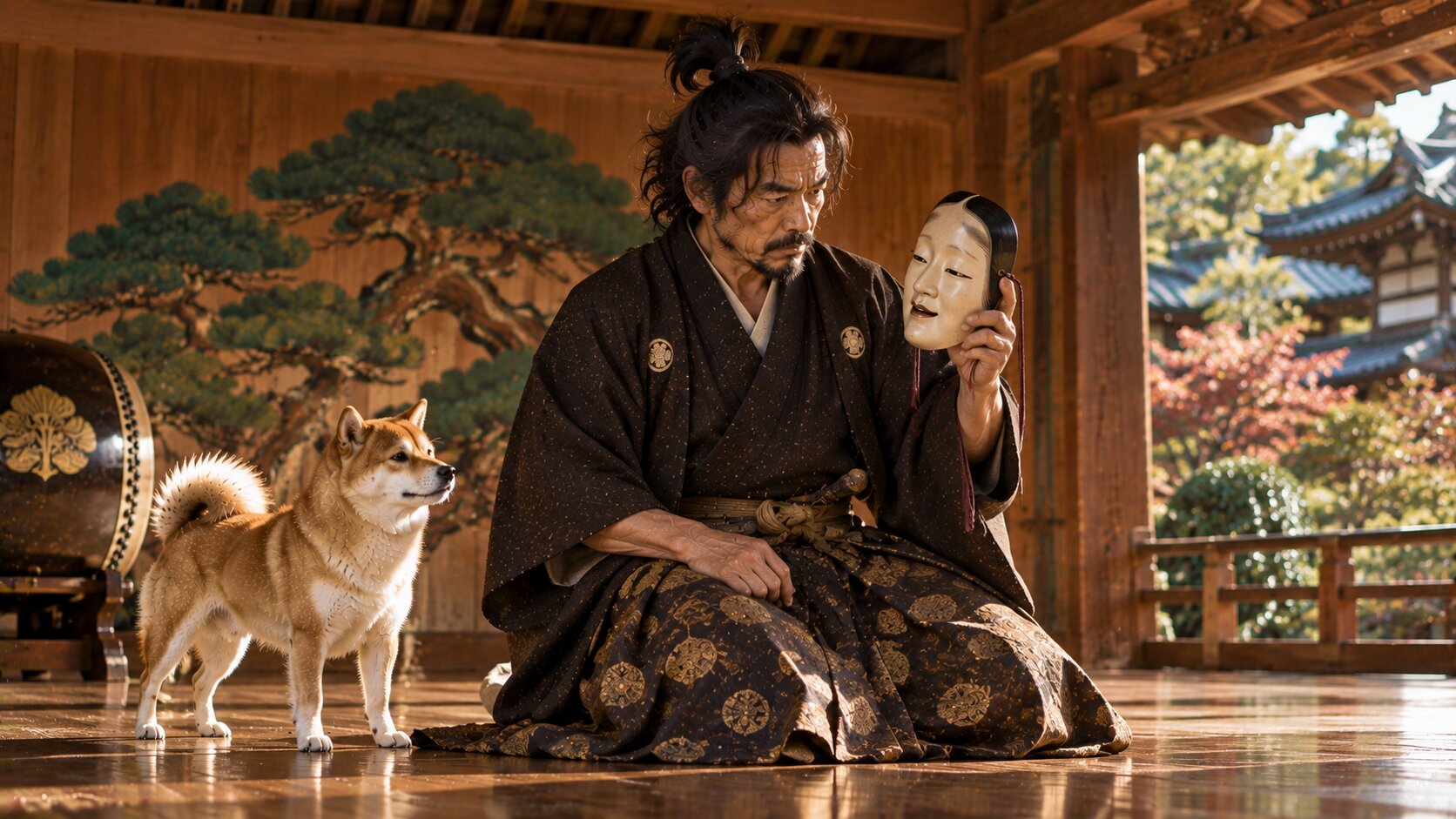
夕暮れの能舞台で、
低い謡が松の絵に響く。
古い声が、今の空気をゆっくり満たす。
On the Noh stage at dusk,
a low chant resonates against the painted pine.
An ancient voice slowly fills the present air.